Showing posts with label Quality Tool/Technique. Show all posts

Sunday, August 15, 2021

Start off a student with a greeting and a smile! And, What Makes a Great Teacher?

Updated August 2021,

School has already started in many school districts with the majority starting after Labor Day. I wanted to repost a few articles from the past that are so relevant now since the Covid Pandemic continues to affect our school aged children, especially the younger ones.

2015 - I work as an educational team leader for grades K-2. I chose those grade levels because it provides me the opportunity to help mold and create young students as they begin their educational journeys.  I have found how important and “simple” it is to start their day out with a smile/greeting. 

K-2 Educational Team Leader Credo
I believe it is very important to greet students with a smile and kind word first thing in the morning in the grade school cafeteria (This is where they get dropped off for school before the bell rings) as they start their school day. In many situations it might be the only greeting/smile they receive all day. Students appreciate and respond to settings where they feel welcome. Students who feel more welcome are more likely to seek out my help or others when needed (In today’s dysfunctional families this happens frequently). 

By greeting students (Added plus – learn their names) at the door, I can see and prevent potential problems. Correcting potential problems in the cafeteria before school starts may help a student enter their first class free of stress, or take out frustrated energy in the gym or even carry it all day to their home. Recognizing a potential problem and preventing it is critical to the overall success of the student, their teachers, fellow classmates and the school.

I'm very lucky to be working with some truly remarkable teachers. Their dedication and passion for what they do is outstanding. 
Note: To a “Systems Thinker” this is building/designing quality upfront in the process. It is where the potential for failure and defects are their most dangerous (If unchecked continue to grow) but they are almost always the easiest (Cheapest) way to prevent/fix problems.
Also...

Over the years I always try and observe and learn what makes a good teacher. One of the measures by which I make my conclusion is how well the class learns and just as important how well it behaves and respects all (Teacher, Students) within the room.


If I find that 95% of the students follow this conclusion I know there is a good teacher at the helm. I know when I have found a “Great” teacher when there is a substitute teacher and 90% of the students follow my conclusion because their regular teacher has instilled the pride and learning so that whoever is in the room they give their attention out of respect for their regular teacher.

Friday, June 10, 2016

Want to know what qualities makes a good Quality Advisor?

Want to know what makes a good Quality Advisor/Consultant?

It is a People person who is somewhat a Perfectionist who loves Statistics and Variation. Throw in a little Anxiety Disorder and top it off with a Compulsive Passion for Planning.  Juggle these together and you have Quality Expert in the making for your company.

Friday, July 25, 2014

Where did all the Quality go?

Is it just me or is no one understanding the importance of Quality and most importantly Customer Service? The past months have seen more recalls on cars than I can ever remember. General Motors (GM) needs to pull out their old Dr. Deming four day seminars and review what it means to be a Quality company.

http://autos.aol.com/info/recall/

It's just not GM. Chrysler, Ford (8/14/14 - I just got a Recall on my new Edge)  and the once Quality driven Japanese (Deming Award) car companies are also riddled with poor Quality and recalls.

The United States Government is riddled in Cost of Poor Quality - According to a new report, the U.S. government paid $106 billion in payments in error last year. These included Social Security, Medicare and Medicaid Benefits, unemployment and tax refunds. The Department of Agriculture’s school breakfast program which provides meals to needy children had the highest error rate last year of 25 percent. This is unexeptable. These departments think they have absolute power (Especially IRS) and spend what they want, when they want with no one caring about checks and balances.

Just this week I had three conversations about poor customer service at various schools and colleges in three different states. One school was a college in Ohio, another a private school K-12 in Michigan and another a public high school in South Carolina. When will organizations learn that the hiring process is the most important and customer facing employees (i.e., Secretaries, Administrator Clerks, Admissions Reps, Customer Reps, etc...) the first ones to create a lasting partnership or send people to the exists.

http://qualityg.blogspot.com/2007/09/hiring-process-is-most-important.html

Recently had dinner at Bob Evans - Took 15 minutes for waitress to take order, Cook Dropped Waffle had to re-cook, Gave me a free cookie!


Saturday, April 09, 2011

Methodology for defining customer focused measurements

ESTABLISHING METRICS

When will people in position of authority quit asking for something that may not be obtainable. Each day someone wants someone to create goals and objectives based on little more that this is what we do each year.

How many Project Leaders get due dates and proposed improvement numerics assigned to them that have no way or means of being obtained?

Hopefully the following will help. I have relied on this method for over 20 years. Please let me know if it helps you!

Determine the following: • Purpose/Mission of Process or Work Team - Created by Executive Process Owners - How it was formed & members chosen The first team meeting should lay the foundation for how the group will set and achieve their goals.

TO DO • Define goals of group • Location of meetings • Roles and Responsibilities • Frequency of meetings

Process Owner: • Is accountable for the quality of process output. • Is responsible for results of the process. • Has the authority and ability to make changes. • Can allocate resources (people, time, money, equipment). • Is responsible of satisfactorily carrying out ownership roles and responsibilities to handling other priorities. • Appoints sub-process owners. • Exercises authority to effect change.

Project Leaders: • Plan and schedule meetings. • Communicate teams activities & progress to Process Owners. • Keep team focused. • Responsible for the integrity of all data used in setting up measurements. • Provide expertise on process improvement activities. • Provide technical assistance with process improvement tools and techniques. • Assist in determining and developing operational measurements.

Team Members: • Be the subject matter experts on, and represent, your Operations area. • Communicate with appropriate Operational employees to collect data and implement customer focused measures. • Collect and analyze data for measurements. • Identify appropriate Operations employees to monitor and measure data on an ongoing basis. • Actively participate in team meetings.

METHODOLOGY FOR DEFINING AND ESTABLISHING CUSTOMER

FOCUSED MEASUREMENTS


Measurements should track how well our processes are performing according to: • Customer Expectations (inc perception) • Organization Objectives • Customer Satisfaction • Value Drivers • Competitive Benchmarking • Employee Satisfaction The above stated types of measurements will help determine the overall quality, efficiency, and effectiveness of all processes.

The activities involved in defining and establishing measures include: 1. Determining effective measures 2. Reviewing and validating existing measures 3. Implementing new measurements 4. Install a measurement and reporting system 5. Establish a feedback and monitoring system 6. Monitor measurements

1. DETERMINING EFFECTIVE MEASURES

Purpose:Effective measures provide an insightful means about the efficiency of a process. Measures of this type are meant to track and align performance (process) and results (quality) indicators of a business process.


Establishing Effective Measurements: Create effective measurements based upon the following: • Customer expectations/requirements • Practical to implement • Easy to comprehend • Consensus of agreement by group • Able to help drive culture change

What to Measure:

Establish measurements based upon customer expectations and business objectives. These measurements should measure what our customers care about and what will drive our Value Drivers toward exceeding Operational business objectives.

Develop objective measures of customer satisfaction. Without measures, we have no means by objectively assessing the magnitude by which our processes are performing to customer and business requirements, and whether or not our improvement efforts and newly implemented systems have improved the process. These types of measurements should provide objective data that will drive decisions that will produce long-term customer preference.

If suppliers are included, be sure to measure input characteristics and services.


How to Measure:

Implement simple, easy to understand measurements whenever possible. Measurements that are complex will not be used. It is vital that our measurements be easily defined, understood and communicated to assure common understanding. A small amount of meaningful measures are worth 10 times more than a large amount of nice to know measures (non-value added).

It's OK to experiment with measures, if they don't tell you what you need, stop measuring and create new ones. If at the beginning measured identification is difficult, start with customer satisfaction, every major process has a customer.

Don't just measure one aspect of a process. Your measurements should be balanced with variable, attribute and some subjective characteristics like time, cost, quantity and customer perception.


Evaluating Measures:

In the beginning it might be best to implement a few strategically based measurements. As stated before, it's best to experiment and monitor the effectiveness of few, rather than implementing a large amount and never monitor.


2. REVIEWING AND VALIDATING EXISTING MEASUREMENTS


Purpose: Once we've identified and understood what makes effective measurement, it is necessary to assess measurements that are already in place. Effective measurements provide input data that drive motivation for continuous improvement. Those that do not measure up should be changed or eliminated.

Measurement Balance: If current measurements are only measuring internal business objectives, move to measure the effectiveness of our processes or solutions from a customer perspective.


Measure Behavior: Implement measures that level to desired behavioral results. Verify the measures do not drive undesired behavior by our workers or to your customers. For example, many companies have found that they speculated "speed of answer" as a desirable measurement for customer satisfaction. Customer survey and interviews found that quality of service provided was more important than speed of answer.

3. IMPLEMENTING NEW MEASUREMENTS


Purpose: It is vital that any new measurements implemented are effective and efficient and that it is collected, analyzed, and used in a way that motivates positive behavior and not punitive threats to workers.


Data Collection: Make sure those responsible for collecting or installing new measurements are familiar with data and are part of the implementation plan.

4. INSTALL A MEASUREMENT AND REPORTING SYSTEM


Purpose: Installing a measurement and reporting system requires an action plan of implementation that identifies the roles and responsibilities of the Process Owner and Sub-Process Owners who will be accountable for the measures. This also requires agreement on what measures will be reported and that method and system support is available. The Action Plan must include trend analysis and plans of who will respond to them in a timely basis.


Automation: Whenever possible and cost effective, automate as many measurements as possible. The advantage is more accurate and timely data collection and analysis.


Share Measurements: Post measurements data in visible places, so that results can be shared by workers in the process. It's also a good idea to keep everyone in the process informed from end-to-end.

5. ESTABLISH A FEEDBACK SYSTEM


Purpose:By establishing a feedback system, employees will keep abreast of changing expectations and update the current process as required.


Sharing Feedback: Corporate Quality, Marketing, Sales and Front Line customer facing employees must keep upper management aware of changing customer needs so that business objectives and measurements may be changed accordingly. It's also important to share feedback with workers in the process as well as customers and suppliers.


6. MONITOR MEASUREMENTS


Purpose: Employees identified as measurement owners must constantly evaluate their measurements, reassess customer needs, and continuously search for new ways to use data for continuous improvement.


Evaluate Measurements: If your measurements are not accurately reflecting process performance or drive undesirable behavior, they should be removed. Update or install new measures as needed.


Benchmark Measures: Benchmarking your process measurement performance relative to your competitors will be vital to competition. Benchmarking provides information to leaders that helps establish performance targets based on data from the marketplace. Benchmarking is a useful method to supply additional data and information but not to be used exclusively for changes or measurements.

Remember - Benchmarking is a guide for your own measures and must fit your process.

Monday, August 16, 2010

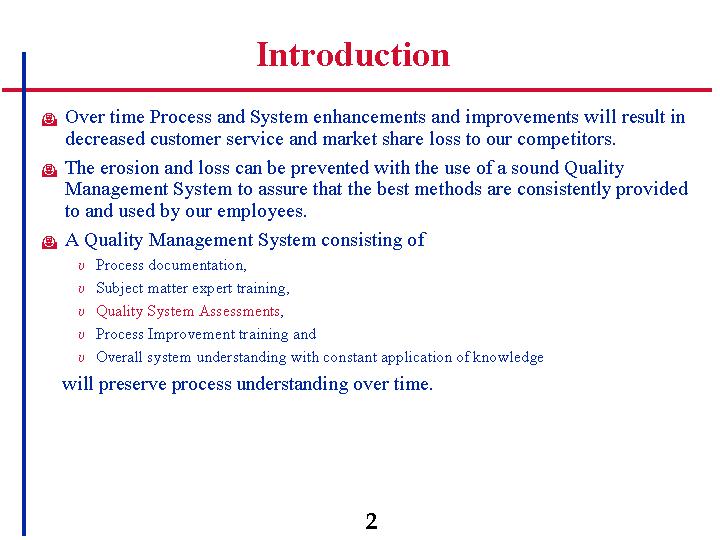
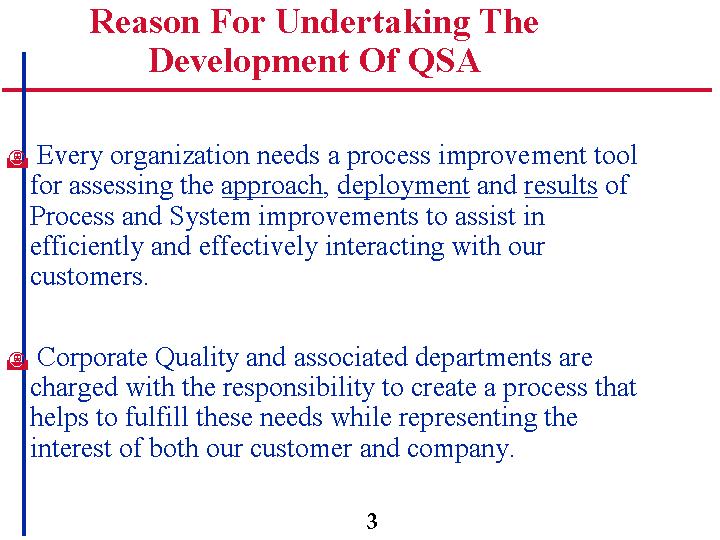
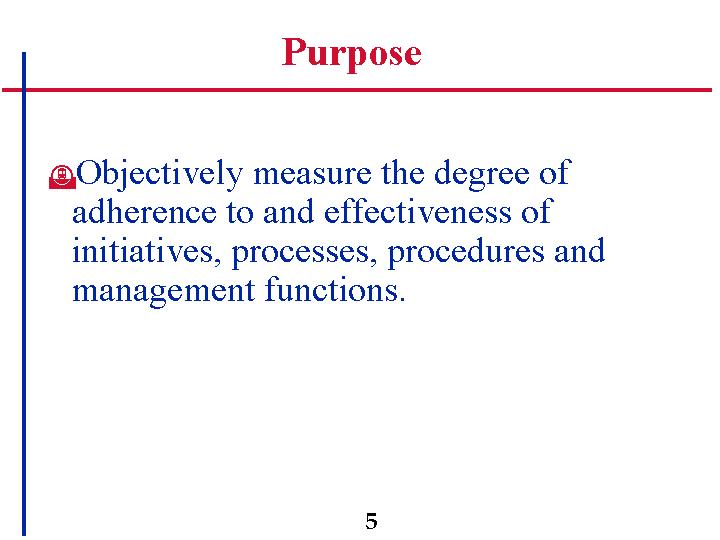
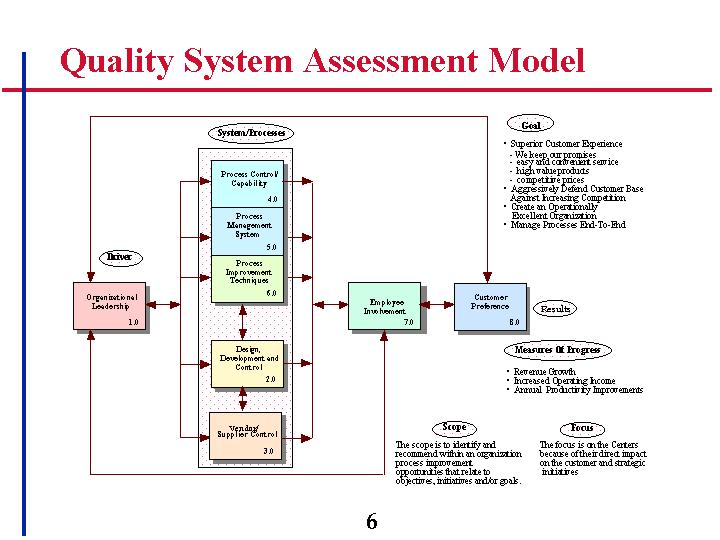
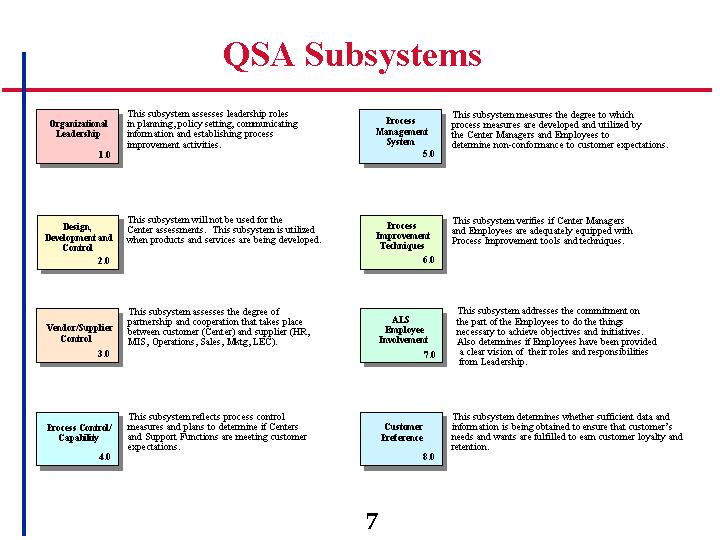
"Quality System Assessment (QSA)" - qualityg style

During these hard economic times it is critical that organizations (including educational institutions) take preventive measures to ensure that waste and non-value added activities are removed from their company (school system) before they let more people go to the unemployment lines.

I have been involved in many audits (Baldridge, ISO, Educational) that include large corporations and educational (school systems) and most of them have been a political joke. Have the time the auditors had no idea what they were doing and it came down to 1 or 2 people who made all the decisions regardless of data and information. Unfortunately, I have been on some of these type of teams and I was embarrassed to be associated with the group and the organization that conducts the audits.

The intent is good but like most plans they fall short because of political and monetary gain (by audit & company leaders) by those overseeing the audits to make sure they gain a long term commitment to keep the money, audits,recognition flags and patches coming.

Many managers/administrators have no idea what their people are doing in a full day. There are too many employees still making errors and their are still far too many consultants getting paid to come in and tell leadership what is already known within their own organizations.

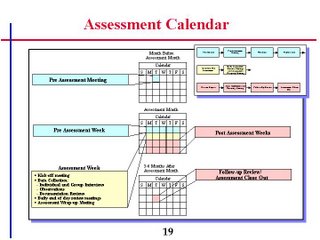
Create your own internal Quality System Assessment. Use the following as a model:

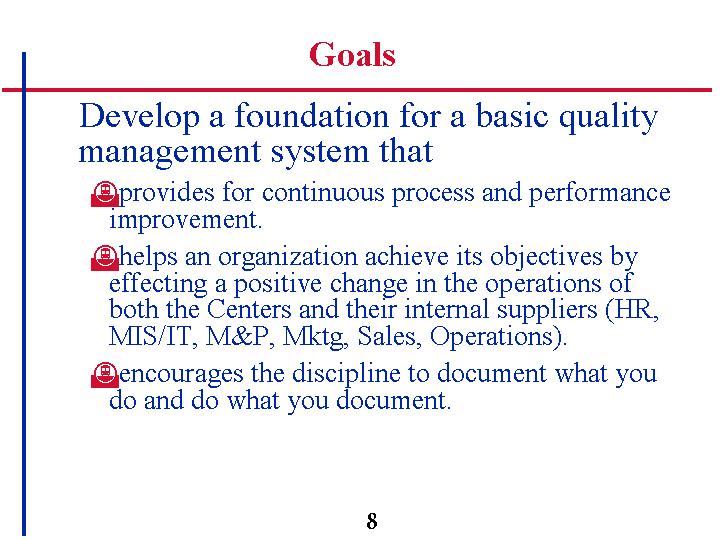
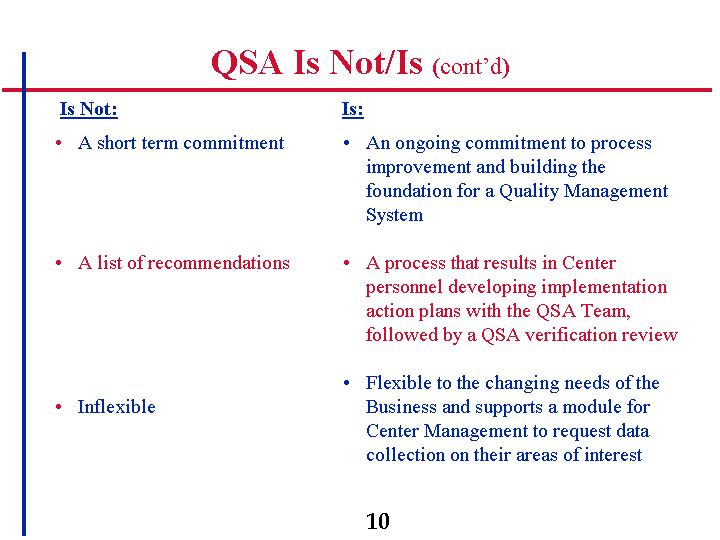
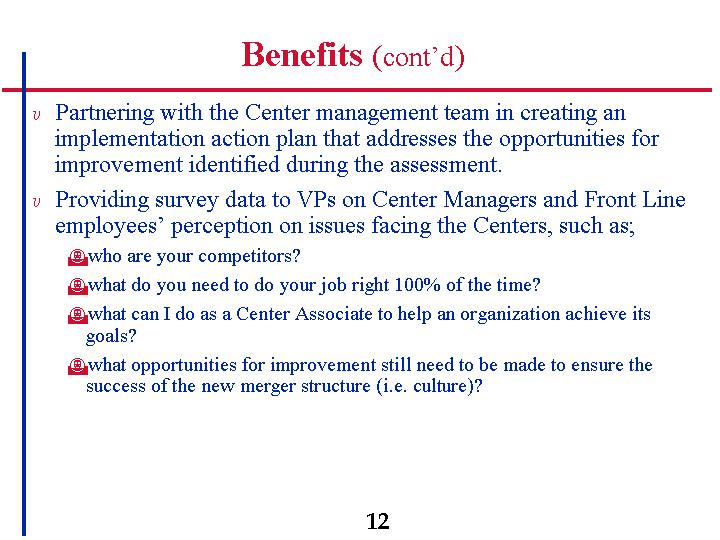
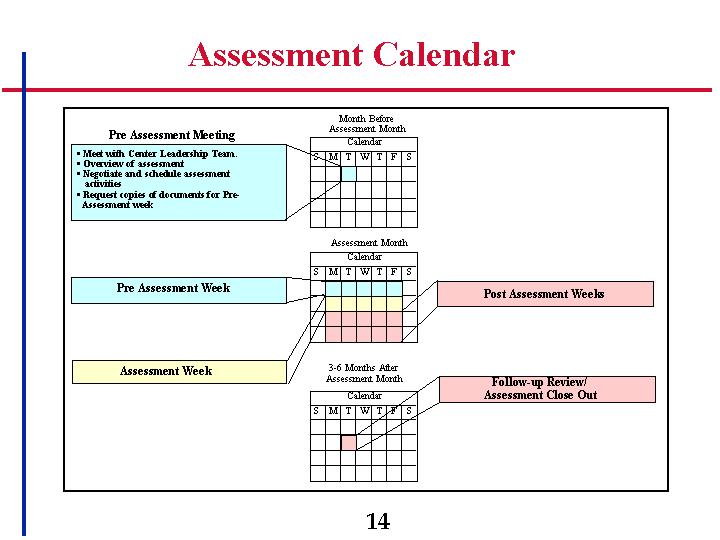
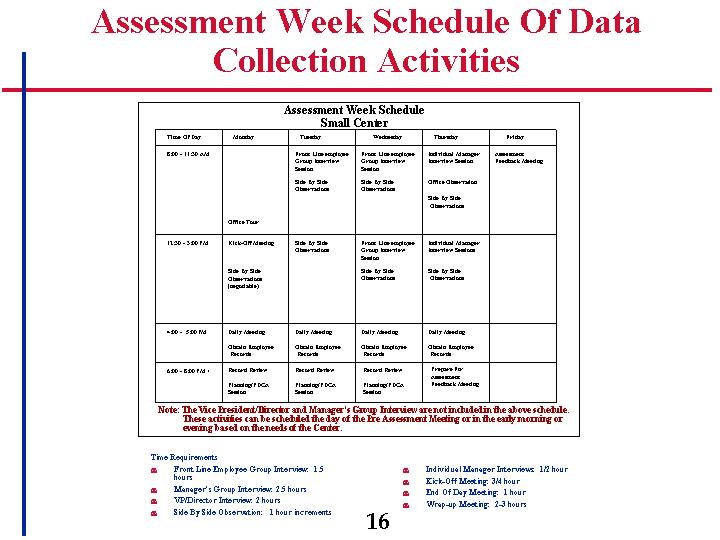
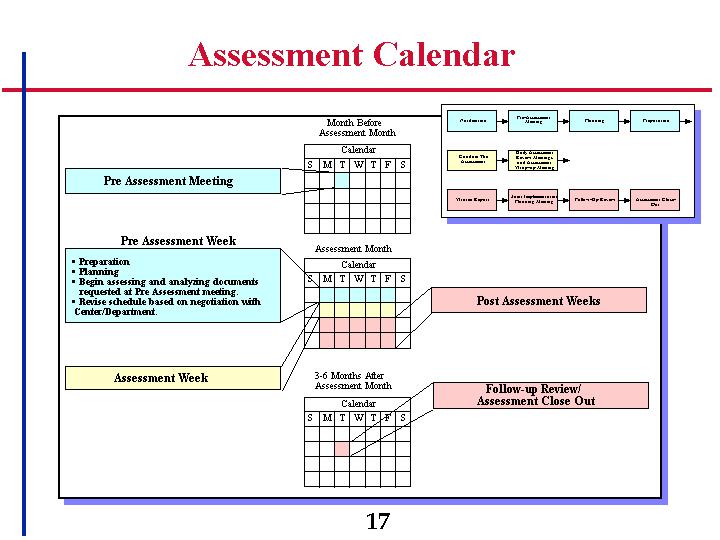
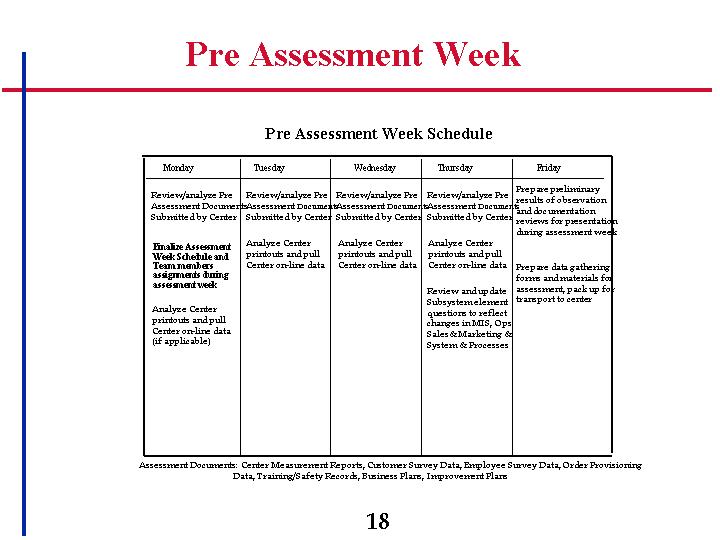
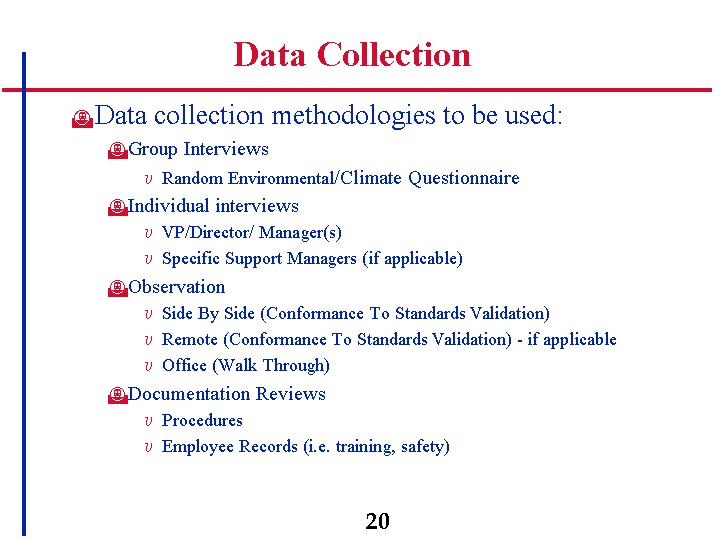
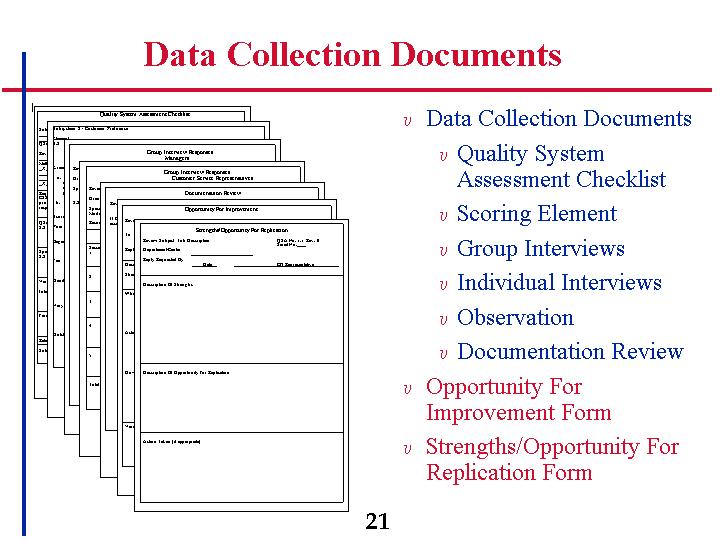
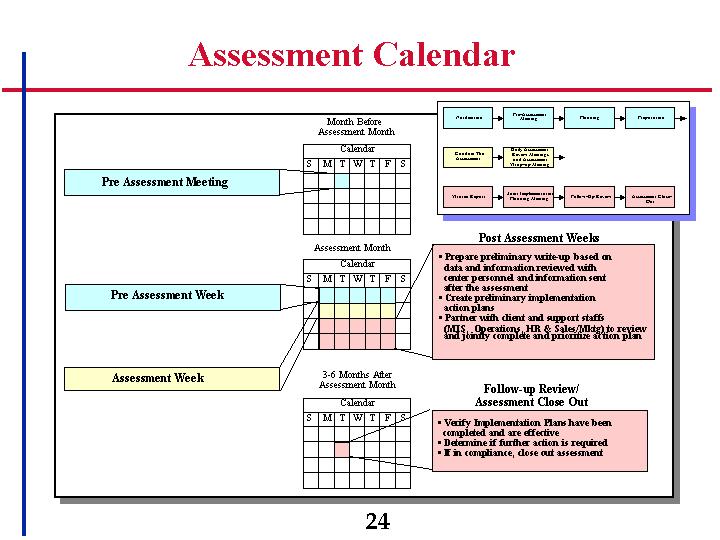
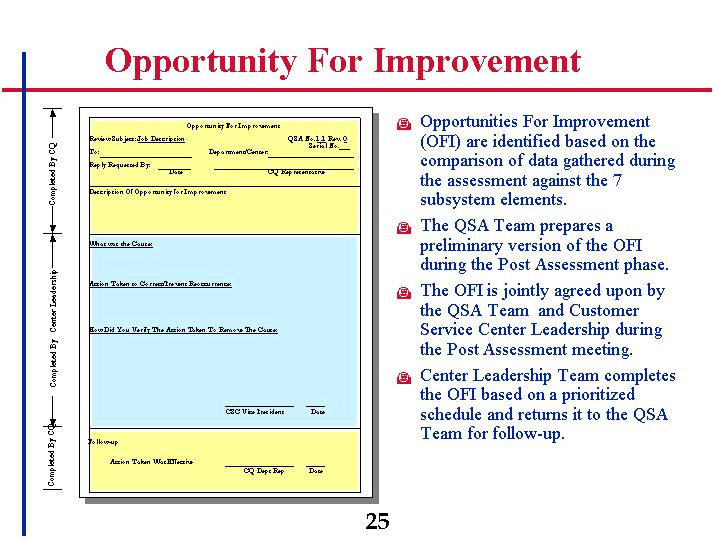
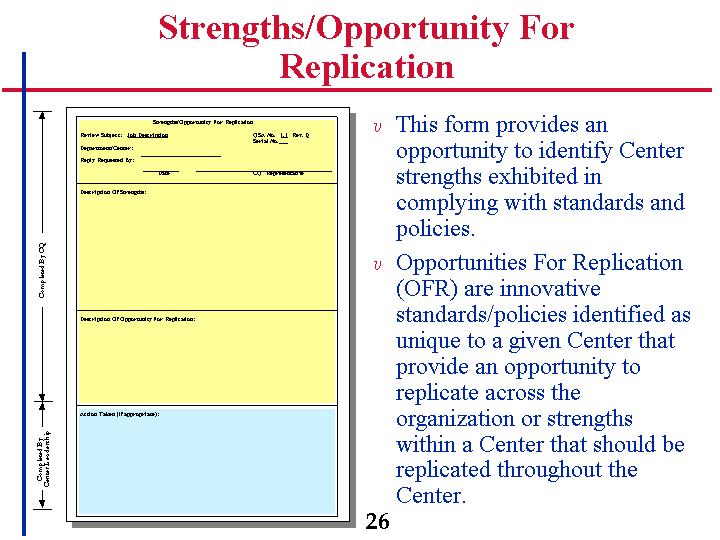
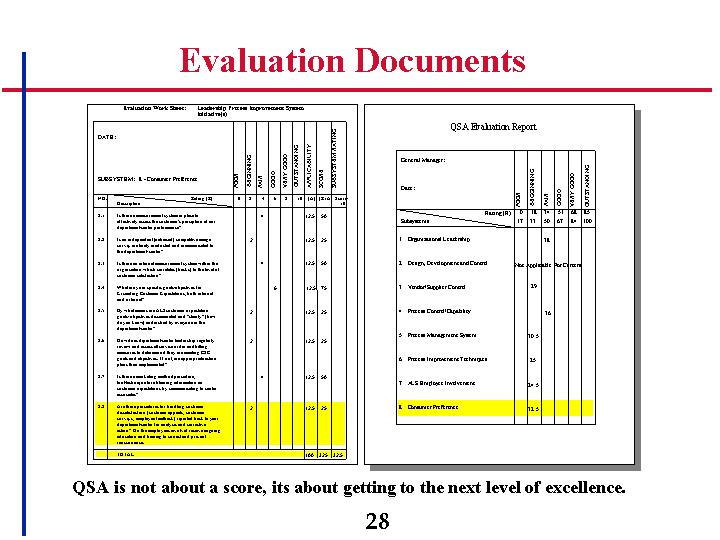
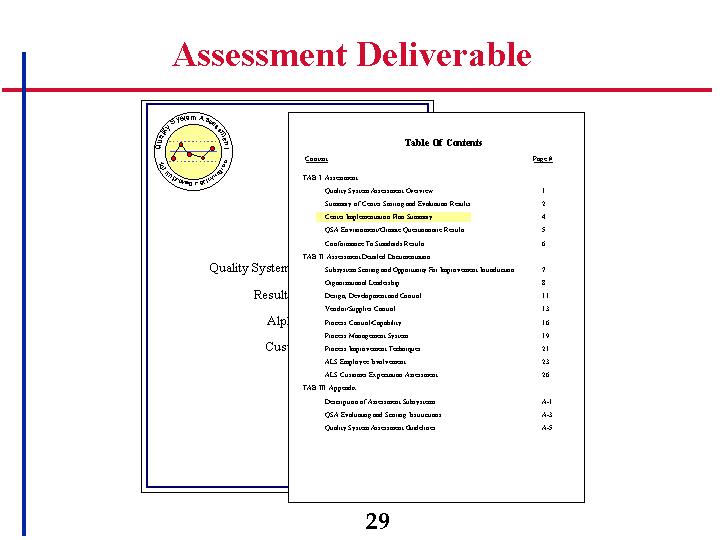
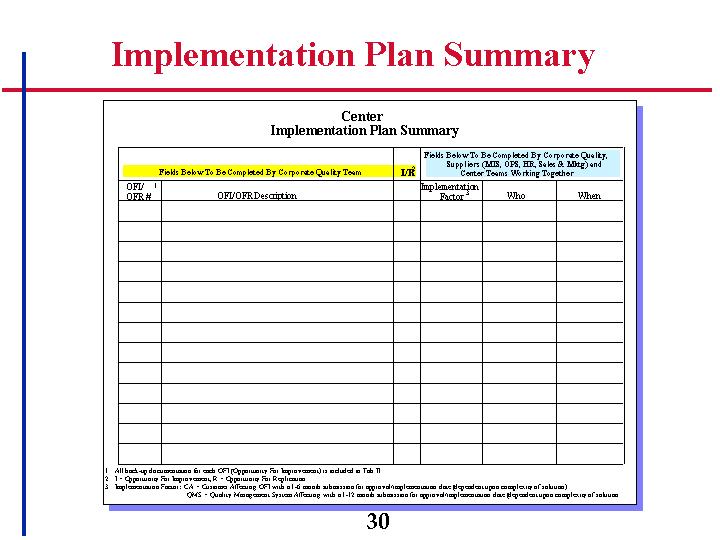
Over the years I have created and developed a Quality Tool/Technique that I call "Quality System Assessment" (QSA). It was designed to be used for any industry (quality, business, education, government). The major design inputs were taken from the Deming Award, ISO 9000, Motorola, Malcom Baldridge and my own quality assessment experiences.
I have been certified and trained as a Baldridge Auditor and Judge (Michigan). ISO Auditor and Lead Auditor. Certified ASQ Manager & Auditor. Trained as a Lead Quality Advisor from Florida Power & Light (Deming Award Winners). Six Sigma Black Belt (AT&T). Attended numerous classes at Motorla University.

My hope in sharing this is for the reader to be able to have a model to create/design their own QSA that will help improve systems and processes within any organization.

I will post the Slides in a PowerPoint Presentation format.


Click on SLIDE To Enlarge & Print


Remember to Click PICS to Enlarge


Click Slides to Enlarge


It is my hope that you will be able to use my QSA Model to identify potential problems and improvements in your systems.

Soon I will provide some QSA analysis questions to help with the Assessment.

Updated 8/15/10 - go to http://qualityg.blogspot.com/2008/04/quality-system-qsa-commentsquestions.html

please let me know if the model proved useful to you or your organization.

Owned, Developed and Created by qualityg

Sunday, August 01, 2010

Brainstorming - I THINK NOT!

Process Improvement and Quality Consultants get upset when I talk bad about some of their tools and techniques used to generate ideas and solutions on how to identify root cause and suggest solutions.

Today the subject is “Brainstorming,” and why it is not worth your time and effort.

I read the following headline today in the Detroit Free Press:


“Hundreds of people concerned about the ailing state economy came to the University of Michigan on Tuesday to brainstorm ideas on how to increase Michigan's role in the global economic environment.” (qg says ...why then do we have a department in Lansing that is supposed to know how to increase and improve our state economy - if they can't ---> get rid of them).

First let me provide a definition that is usually found in many quality and process improvement training books about Brainstorming.

Brainstorming:
Most problems are not solved automatically by the first idea that comes to mind. To get to the best solution it is important to consider many possible solutions. One of the best ways to do this is called brainstorming. Brainstorming is the act of defining a problem or idea and coming up anything related to the topic - no matter how remote a suggestion may sound. All of these ideas are recorded and evaluated only after the brainstorming is completed.


It is a means of aiming to facilitate problem solving through the maxim quantity breeds quality. The greater the number of ideas generated, the greater the chance of producing a radical and effective solution.


Procedure:
  1. In a small or large group select a leader and a recorder (they may be the same person).
  2. Define the problem or idea to be brainstormed. Make sure everyone is clear on the topic being explored.
  3. Set up the rules for the session. They should include:
    * Letting the leader have control.
    * Allowing everyone to contribute.
    * Ensuring that no one will insult, demean, or evaluate another participant or her response.
    * Stating that no answer is wrong.
    * Recording each answer unless it is a repeat.
    * Setting a time limit and stopping when that time is up.
  4. Start the brainstorming. Have the leader select members of the group to share their answers. The recorder should write down all responses, if possible so everyone can see them. Make sure not to evaluate or criticize any answers until done brainstorming.
  5. Once you have finished brainstorming, go through the results and begin evaluating the responses. Some initial qualities to look for when examining the responses include:
    * Looking for any answers that are repeated or similar.
    * Grouping like concepts together.
    * Eliminating responses that definitely do not fit.
    * Now that you have narrowed your list down some, discuss the remaining responses as a group.


Brainstorming has many applications but it is most frequently used in:
Problem Solving - issues, root causes, alternative solutions, impact analysis, evaluation
Process Management - finding ways of improving business and production processes
Project Management - identifying client objectives, risks, deliverables, work packages, resources, roles and responsibilities, tasks, issues
Team Building - generates sharing and discussion of ideas while stimulating participants to think


qualityg says … If your PI Consultants or Management Team have no idea on how to capture problems or generate sound solutions then you are in big time trouble. Using subjective ideas and information (Brainstorming) for possible solutions is WRONG and more than likely will result in “Tampering (special vs. common cause)” and “Sub-Optimizing your processes/systems.

Forget about the feel good of giving all employees a chance to participate in decision-making. You better be gathering/monitoring your processes to tell you where problems are located with objective data and information (including subject-matter experts).

Look again at the steps above, do you really want to waste time, resources and dollars making suggestions that may or may not have any value to your current situation. Once the team generates these probable ideas/solutions then they go out and try to collect data to justify their conclusions.

How stupid is that? Sounds to me your Consultant and Management Team have no idea what they are doing, and that does not surprise me!


Sunday, April 04, 2010

Company Principles

HOW DOES A START UP COMPANY GET ON TRACK OR HOW DOES AN EXISTING COMPANY GET BACK ON TRACK.

The answer is fundamentals or what I prefer to call "Company Principles."

IN A FOOTBALL SPORTS RELATED ANALOGY IT IS CALLED BASIC BLOCKING AND TACKLING that will help a company get back on track? I believe a good start would be with the "Principles" or the foundation blocks that have been destroyed with short-term goals and thinking.

What follows are some basic Principles that each senior leader should revisit and implement:

A company principle is a fundamental belief that is focused on the continual performance improvement of our services and products through addressing the needs of our customers, employees and stakeholders. The principles are as follows:


Customer-Focused – we must consider our customers’ current and future needs, fulfill customer requirements, and strive to exceed their expectations while keeping corporate strategies in our sights.
Read - http://qualityg.blogspot.com/2008/02/customer-focus-2008-beyond.html
Management Owns Our System and will establish constancy of purpose and direction for the group.

They also create an environment in which all employees can be involved in obtaining company objectives.

Employees as People – our team approach is the essence of who we are and what we stand for. We need to listen and support each team member and to encourage each person to express their innovations and creativity.

Process Approach – by using a process approach to managing resources our activities will produce the desired results. When activities our work activities are linked together there is a structure for effectively managing and improving.

Systemic Thinking – company efficiency and effectiveness will be improved by identifying, understanding, and managing a system of interdependent processes that results in improving the whole not just the parts of any situation.

Continual Improvement – our company must have continual improvement as a permanent objective. Our premise will be to follow our Quality for Process Improvement. We must never settle for the status quo. Challenge Conventional Thinking!

Management by Fact – each of us needs to manage our work by collecting and analyzing objective data and information in order to make effective decisions that are certified by sound financial bottom line results. Avoid Short-Term Goals and People with short memories who are looking for the quick ride to the top at your expense.

Supplier Relationships – by working and partnering with our suppliers and contractors we will develop mutually beneficial, interdependent relations that will create a win-win situation for all involved. Perhaps looking a a single suppliership is required.

Developed by qualityg

also see Leadership Characteristics at http://qualityg.blogspot.com/2006/12/quality-leadership-characteristics.html

and Business Plan Objectives and Goals at http://qualityg.blogspot.com/2006/11/quality-tooltechnique-2007-qg.html

Sunday, December 27, 2009

2009 Most Searched Upon Topics

As 2009 comes to a close I would like to thank the 23,000 plus visitors to my Blog this past year (up 8000+ from last year). I hope the information I have provided has been useful and thought provoking.

As I look over the stats the following are the most searched on topics within my site for 2009:

1) Employee Goals & Objectives - 3rd year in a row

2) Quality Tools & Techniques (Especially SIPOC Analysis & Pareto Charts)

3) Education

4) Leadership

5) Autism - ASD Mainstreaming


What I find most interesting is that "Employee Goals and Objectives" is not one of my main labels and the hits are world wide and not just in one area like the United States or Germany.

Employee Goals & Objective continue to be the most misunderstood of all Management and Employee Tools. They remain a once, twice or four times a year exercise in futility that brings no meaning to employee or boss all the way up the corporate ladder.

One should click on my Label for Dr. Deming to learn from the Master about Employee Goals and Objectives.

How sad that open communication and trust can not be tolerated in the workplace. People with numbers who have no sense of "Predictability" (Number One Skill of a Manager)and continue to Tamper with both human and corporate systems.

Below are some Links to some of my more popular posts on this subject:

http://qualityg.blogspot.com/2008/10/evaluating-team-effectiveness.html

http://qualityg.blogspot.com/2008/07/team-goals-and-objectives.html

http://qualityg.blogspot.com/2006/02/quality-tooltechnique-systems-thinking.html


Thank You and Best Wishes for a New Year!

qualityg

Tuesday, December 15, 2009

2010 Corporate Quality Business Plan Goals & Objectives

Have you done your Strategic Planning for 2010? If not, hope the following plan will ease some of your pain.

I have received Email requests over the years asking what should go into a Corporate Quality Business Plan. It would be my hope that one would not be necessary because quality is engrained within the company and there is not a seperate quality department.

Unfortunately I know this is not the case in many companies and for those who have no Quality Initiative in place perhaps this example can serve as a model.

So I will provide an example Corporate Quality Business Plan in Stages as they are being developed. I will use 2010 in my example of a company called "qualityg National Operations." The most important part of a Quality Plan is that it is integrated with the overall company strategy. All CQ goals must lead to accomplishing company goals and objectives.

This example also can serve as a model for any department.

I hope you will be able to use the following model as a starting point for your own quality initiatives -- qualityg

Dilbert by Scott Adams says it best (Click on Pic to Enlarge).


qualityg’s CORPORATE QUALITY SERVICE
2010 BUSINESS PLAN
EXECUTIVE SUMMARY
The qualityg Corporate Quality Service 2010 Business Plan format has been developed to provide guidance and support to organizational strategies and ensure execution of the leadership platform necessary for our success. The plan is divided into two parts:

Part 1- Corporate Quality Service Objectives for 2010

Part 2 -National Leadership Team Strategic Quality Objectives for 2009
2010 promises to be an exciting and challenging year for the qualityg Corporate Quality Team. With the rapid changes in business, technology and competition, it is vital the Corporate Quality Organization directly supports National Operations and partner with other all out internal departments (e.g., Customer Services, Engineering, Operations, MIS, Finance, etc.). Our focus will be to work with these various groups and leaders in defining a total quality system that fits the business needs and strategy of the corporation to insure we accomplish our role in business to build, provision and maintain our products and services. Using this approach, the quality team will consult and advise senior leaders in strategic planning, implementation, assessments and process improvement activities.
We will accomplish these goals by directing our focus on improving the customer experience by driving standardization and excellence in all our critical functional activities and processes. This will be executed by developing strategies that:

· Create an organization that understands the customer and is willing to adapt our process to meet or exceed customer expectations.
· Educate employees on how their roles and actions fit into the companies overall structure for system optimization.
· Continue to drive the Operational Review as a value-added process.
· Reduce cycle times (order flowthrough).
· Improve standardization of activities and processes.
· Reduce National Operational expenses.
· Eliminate non value-added activities and rework.
· Reduce defect rates across Network.
· Support Corporate Quality Initiatives.


We will be successful by assuring that we meet and exceed our goals and objectives for Service Improvement and Customer Preference/Retention. We want our company to be the company of choice for our customers. We will keep our promises!


The Corporate Quality Team will focus on:

● Quality Assurance,
● Problem identification, resolution and prevention,
● Continuous process improvement, and
● Improving the customer experience.

Delivering on this approach is essential to the overall strategy for 2010 and beyond. The reality is we must consult and advise our internal customers in using quality principles and techniques effectively; employees must gain practical experience in applying quality methods in their daily work. The continued integration between internal departments is a critical factor that must be supported so that our operating styles, and cultures can be transformed into one for the benefit of our customers. Emphasis will be on the following items:

· Providing consultation and workshops on performance excellence and techniques.
· Conduct Just In Time Quality Training.
· Establishing customer and corporate specific process measures and goals.
· Conducting Operational Reviews with timely and cost effective resolutions.
· Documenting and analyzing Operational Review data for continuous process improvement value added activities.
· Be the catalyst for communicating downstream operational problems to the process owners for driving upstream process improvements.
· Assist in streamlining our most critical customer affecting processes.
· Own internal/external customer feedback measurements that drive our decision- making policies.
· Increasing our understanding of competitive information and benchmark “best in breed” practices to determine gaps in existing processes and procedures.
· Continue to support ISO 9000 compliance as required (e.g., where/if required).

By concentrating on these strategies we will derive the following benefits:
· Meaningful measures that support unit and corporate goals.
· Systemic identification and removal of root causes to problems identified.
· Clarification of work activities.
· Value added decision-making based on data and facts.
· Prevention of problems especially in design processes.

Our ability to assist in delivering excellent service will depend on our commitment to develop defect-free customer service. This will be determined by working with the appropriate departments and work groups to establish monitoring metrics like availability, reliability, error free new builds, rapid provisioning (defect free order flowthrough) and timely resolution of customer problems.


By conducting a systomatic disciplined approach to our work and providing consistently of purpose for our entire team, the qualityg Corporate Quality Team will also focus on five key dimensions and one “Common Goals” for success:

1. Customer Satisfaction is comprised of all the methodologies required to meet or exceed customer expectations and set the directions, which ensure intimacy and customer satisfaction. This section will establish and set measures of quality required to address customer issues and create the benchmarks needed to ensure customer preference.

2. Employee Value - as we continue to be a major player in this competitive market, it will be essential for all our employees to continually improve and excel in their work functions. It is leadership’s job to enlighten, enable, empower and encourage the behavior that drives Operational Performance Excellence and Customer Satisfaction. Employees must understand their roles and responsibilities and be aligned with qualityg’s business strategies and embrace the characteristics that enable us to be a major player in our industry. Consistent execution in a rapidly evolving industry will be key to our success.

3. Financial competitive challenge will continue to put pressure on our revenue growth throughout 2010. In order to maximize short and long term profitability, expense reduction and business growth, we must continue to invest in capital to grow revenue with established customers and improve gross margins by assisting in increasing our customer base. We must also manage our metrics and defend our current revenue stream from competitors. It is clearly the responsibility of all employees to aggressively increase our service productivity while reducing our expenses. Corporate Quality will demonstrate cost savings by conducting value-added Operational Reviews that will achieve avoidable costs (e.g., rework, defectives, non value-added activities, non-standardization, etc.) that will be eliminated through prevention and root cause analysis. Corporate Quality will assist in obtaining additional sales and retention of existing customers through customer specific programs. This will be accomplished while staying within all budget parameters during 2010.

4. Quality Management will be systemically integrated throughout the Customer Satisfaction, Employee Value and Financial Objectives. Our role as quality leaders must be to maintain and continue to view quality as an integral part of our day to day operations and the foundation that supports the other key dimensions. This ensures a concentrated focus on quality leadership and spans all aspects of quality, including training; execution, strategies, tactics and other activities designed to measure customer satisfaction and continuous improvement. In addition, as quality assessors we will provide value-added reviews that lead to improved operational performance of our nodes, switches and other facilities.

5. Community Involvement is an integral part of our 2010 strategy and will be utilized in Corporate Quality to demonstrate our added value to the communities and cities where we operate and live. Corporate Quality will develop specific plans, which will demonstrate how we enhance the value of our company in the community.

Values: Our Common Goals. Corporate Quality Service commits to the following values to guide our decisions and behavior:

· Respect for employees
· Dedication to helping customers
· Excellence of standards for integrity
· Teamwork
· Innovation

By executing these values, Network Operations strives to set a standard of excellence as a customer-focused team that will reward our customers, stakeholders, and all of our employees.


PART 1 – CORPORATE QUALITY SERVICE

CUSTOMER Satisfaction


Corporate Quality’s Customer Satisfaction goal is to be highly valued by our customers for consistently providing world-class service through a team of capable dedicated professionals.

Customer Satisfaction is the single most important differentiator in our goal to be “simply the best” in 2010 and beyond. Led by each manger, we can positively impact the results and the objectives of our business plan. Customer Satisfaction is a strategic initiative and the corner stone of our competitive advantage in the marketplace.

Exceeding our customer’s expectations means we must change the relationship we have with our customers. This means by continually partnering with all customers to establish and manage a clear understanding of their needs, which will strengthen our relationships with our clients.

GOAL: To establish the value of Corporate Quality Service throughout our company with all other client facing organizations.

Strategies /Tactics:

1) Train on Performance Excellence and Process Management throughout National Operations.
2) Support and assist in Company Programs.
3) Design, implement, monitor processes, and develop feedback and measurements designed to calibrate performance relative to improving the customer and supplier experience.
4) Develop mutually agreed to milestones and quantify these as much as possible.
5) Work with all qualityg departments to develop and execute plans which protect the embedded base of services and position new offers.
6) Document and communicate achievements via the Intranet and other communications vehicles.
7) Manage National Operations role in Operational Reviews including follow up and resolution of outstanding issues.
8) Continue to conduct internal Supplier Support (e.g., Engineering, HR, IT, etc.) meetings using data obtained from Quality Operational Reviews.
9) Attend and consult on Performance Reviews with responsible National Operations (N.O.) Management to identify process improvement opportunities.
10) Partner with external customers (i.e. Acme) to share and meet their respective quality goals and standards.
Objectives:
1) By the end of 1st quarter 2010, have a process in place to ensure communications and feedback via Webmaster strategic responsibilities for Corporate Quality and National Operations.
2) By the end of 2nd quarter, establish a Best Practice process for Quality Operations Reviews that can be leveraged nationwide and manage their communications for continuous improvement.
3) By year-end conduct Performance Excellence and Process Management Awareness to all major National Operations cities.
4) Continue to establish a quality partnership with Acme (Preferred Supplier) to share and meet their quality standards and goals.
5) Continue to partner with Manager of Quality Operational Reviews to support and assist in city operational review process.
6) Continue to share Operational Review data and analysis with appropriate departments (e.g., Engineering, HR, Engineering, Operations, etc.) to insure Operational Performance Excellence.

GOAL: Support field organizations to achieve an exceptional rating in all categories of the company Employee Satisfaction Survey.

Strategies / Tactics:
1) Ensure company awareness of the Employee Satisfaction survey results.
2) Have a joint meeting between C.Q. and respective leadership teams to discuss survey results and opportunities for improvement.
3) Assist appropriate leaders within National Operations in developing action items for improvement opportunities.

Objectives:
1) Throughout 2010, conduct an analysis on each employee trend survey and ensure distribution to the National Operations Leadership Team.
2) Provide analysis and feedback on the Employee Trend Survey by identifying the strengths and weakness to the leadership team.

Dr. Deming said “It will not be enough to have employees who are merely satisfied. Satisfied employees will depart, for no good reason, just to work somewhere else. Success and growth come from employees who boast about our company. The loyal employee requires no rewards or other persuasion, and he/she convinces other employees to remain.”

Ownership: Corporate Quality Service is responsible for the design, enhancement, execution and communications of the employee survey. Corporate Quality is responsible to assist National Operation’s leaders for the development of action plans for improvements based on the survey results.


GOAL: Attain World-Class status with our customers by continuously improving our employee processes and procedures.

Processes are the systems of tasks, work flows, information exchanges, people and technology that create value for National Operations employees that are required to differentiate our service from our customers.

Key customer processes include a systemic end-to-end perspective that develop, produce, distribute, and support the primary products or services of National Operations. They form the strategic capabilities that enable the business and empower our employees to compete effectively.

Strategies /Tactics:
1) Assist N.O. Leadership Team in prioritizing core customer affecting processes.
2) Assist N.O. Leadership Team in identifying process owners for all customer-affecting processes.
3) Corporate Quality supports appropriate Process Owner by:
- Defining process and identifying customer requirements
- Defining and establishing measures
- Conducting “Gap” analysis based on customer requirements
- Conducting Root Cause Analysis to identify opportunities for improvement
- Prioritizing opportunities for improvement and create action plans for correction
and prevention
- Monitoring process improvements to maintain gains
- Defining quality and process terms and definitions
- Creating Enterprise Map
- Identifying and defining Process Owners, plus their roles and responsibilities

Ownership: Corporate Quality Team will support, educate/train Process Owners and their respective teams in managing and improving key customer processes upon request or direct them to the company’s Quality Training Institute.


EMPLOYEE VALUE
National Operations employees are our most valuable resource. Corporate Quality recognizes that our employees are not just the ones who service our products; they are the ones that can make or break our reputation for an exceptional customer experience.

These basic strategies, tactics, and objectives will enable us to satisfy our employees and optimize the net value of each individual. Keeping a primary focus on Employee Value will require a partnering with Employee Relations processes (i.e. Employee Survey), practices, and programs needed to better support our teams. Corporate Quality’s plan will assist in communicating the goals, strategies, tactics, and the impact of these on our employees and teams. This Employee Value management transformation will ensure that we:

- Clearly define, communicate and implement Corporate Quality Plans
- Invest in our people with on-going education and training
- Ensure Safety practices are followed (i.e. OSHA Compliance, Motor Vehicles)
- Empower our teams
- Emphasize recognition
- Communicate often and effectively
GOAL: Corporate Quality Service leadership is responsible to develop and manage processes that provide the tools, skills and systems required to allow all employees to do the job right the first time.

Strategies/Tactics:
1) Review our own leadership style.
2) Conduct one-on-one and meetings to share leadership expectations.

Objectives:
1) Share C.Q. 2010 business plan with all employees via the face to face manager/employee meetings we all understand our goals and objectives by 1/31/10.
2) Commit to appraisals of individual performance of team members and communicate the company Career Planning Process throughout 2010.
3) Each manager completes career-planning worksheet by 4/1/10.

Ownership: Corporate Quality Service Leader will manage appraisals and a sincere interest in the employee’s career plans. Each manager will receive a written appraisal in 2009.
GOAL: EnableCorporate Quality Service team members with the necessary technical and administrative competencies needed to satisfy our customers.

Strategies/Tactics:
1) Commit to have all new employees attend Quality Operations Training (1 week) during the first 90 days of employment.
2) Support/encourage Training Department and Health and Safety Department to provide guidelines (published on Intranet) on Safety (i.e. OSHA, Motor Vehicles).
3) Maintain an employee skill set for each major job title and training matrix that addresses the
skills required for the job.
4) Training attendance for employees and their managers will be measured and reflected in
performance appraisals. A guideline of 6 days for all employees has been reflected in 2009 training budgets.
5) Managers should develop and implement plans for cross training.
6) Update all training records with Corporate Training at least once a year.

Objectives:
1) Ensure new employee attendance at new employee Orientation.
2) Develop and document a training program for each Quality Manager.
3) Ensure all employees have a required skill set list developed. This list should address the
primary responsibility of the employee and note the required skills necessary to perform their
Function.
4) Attend Employee Relations and Diversity training as required by HR in 2010.

Ownership: Corporate Quality will supply Employee Relations and Health and Safety with pertinent information.
GOAL: To provide leadership and direction incorporating the goals and tasks of Environmental, Health, & Safety (EH&S) within National Operations.

Strategies /Tactics:
1) Develop & Implement Safety Prevention Control and Countermeasure (SPCC) plans for each of our departments.
2) Identify the Field Safety Coordinator (FSC) for every business operation.
3) Require each FSC attend the 2 day Safety Coordinator Training Program developed by EH&S that defines their responsibilities and duties.
4) Establish the EH&S Awareness for Managers training sessions and the Safety Answers for Field Employees (SAFE) course.

Objectives:
1) SPCC plans must be completed to EPA requirement levels for each N.O. city by end of 1st quarter 2010.
2) Request city operation leadership provide Corporate Quality with the local FSC for each city within their regions by the end of 1st quarter 2009.
3) Have each FSC complete the Safety Coordinator Training Program by year-end.
4) Have all departmental employees complete the appropriate awareness and training courses by year-end.

Ownership: qg Corporate Quality Team will provide leadership and direction incorporating EH&S programs within National Operations. Corporate Quality will act as the single point of contact for any program or task EH&S wants to establish within National Operations.

GOAL: Develop and execute a well-defined Employee Recognition Program that supports the Corporate Common Goals by celebrating team and individual accomplishments.

Strategies / Tactics:
1) Clearly understand, communicate and execute the company Recognition Policies.

Areas to recognize are:
A) Accomplishments
B) Common Goals
C) Quality Results
D) Customer Care
E) Superior service at the lowest unit cost

Objectives:
1) Assist in ensuring that all managers are aware of the company Recognition Policies.

Ownership: Each Quality Manager is responsible for assisting appropriate leadership teams in implementing a recognition program on a local level that aligns and supports corporate objectives.

GOAL: To establish a framework for communicating accurate information in a timely and consistent manner to and from all members of the organization.

Corporate Quality will provide information on quality matters impacting the workplace and the customer we serve.

Strategies/Tactics:
1) Corporate Quality will work with the appropriate managers to stress consistent communications within the company.
2) Management needs to develop a set of formal and informal communication strategies that afford the team with an effective communications loop.
3) Where appropriate, respect the need to protect sensitive, proprietary information.

Objectives:
1) Corporate Quality will manage its Web Site, and assist the departments as required.

Ownership: Corporate Quality Leadership is responsible for local staff meetings and the communications plan. Corporate Quality will assume ownership for its respective web sites.
FINANCIAL MANAGEMENT

Rapid changes will impact Corporate Quality by requiring the need to develop strategies and tactics to redesign our production process and our service delivery platform. Each manager will take an active role in impacting the revenue base through quality methods and continuous improvements to achieve a competitive advantage and increased customer preference and retention. In concert with existing revenue and expense management tactics, Corporate Quality will partner with National Operations Departments in their efforts to develop a more effective means of calibrating business expenses.

GOAL: Use sound financial management to meet 2010 budget goals:

Strategies/Tactics:
1) Track all expenses on a monthly basis and share results with team members.
2) Document and monitor cost reduction efforts for more effective budget management and/or
budget under-runs.
Objectives:
1) Meet or improve all budget commitments with monthly measurements.
2) Document Cost of Quality savings to Finance through Quality initiatives (e.g., Operational Review findings, Supplier Partnerships, Quality Action teams, etc.). Assist in the revenue growth by partnering with Acme (Preferred Supplier) in their quality initiatives.

Ownership: Corporate Quality Leadership is responsible for monthly management and reports for all financial commitments.

GOAL: Institutionalize a Cost of Quality management philosophy that will enable the appropriate Leadership Team to measure and continuously improve productivity and cost efficiencies.

All work that is not essential to customer quality or corporate objectives is cost-of-quality work. Additionally, any product or service that does not meet customer expectations results in cost-of-quality work. Corrective and preventive solutions dealing with these matters are generally referred to as cost of quality. Cost of quality is the total dollar amount of the related cost-of-quality work including salary/wages; material and other associated expenses. For example, the cost of quality for removing a customer affecting software system includes labor costs for removing the software, the cost of the software, and the associated processing costs, such as paperwork and scheduling.

Strategies/Tactics:
1) A unit measure is defined as and has the following qualities:
- Generates a work activity
- Is measurable
- Is transaction based
- Is independently driven
2) Selection of a unit is driven by first identifying our customers and listing our deliverables.
3) The Maintenance Units of Measure include tickets (switched services and private line) and
calls. Customer Service units include # of orders, calls, transactions, etc.
4) Establish a transaction time for all measured units.
5) Review and analyze expenditures associated with unit production for improvement opportunities.

Objectives:
1) Support the development of a unit cost budget model based on customer transaction volumes
and work drivers associated with expenses by the end of 2010.
2) Support the development of a unit cost tracking model to provide useful financial information
for the Leadership team.
3) Guide Leadership Team in focusing on improving process management tactics.

Ownership: Corporate Quality will support the unit cost methodologies and work closely with the Quality Action Teams to identify cost of quality measures.


QUALITY MANAGEMENT

Corporate Quality strategy for 2010, will focus on establishing and integrating the best quality concepts, and principles and continue to educate and train our employees in the concepts of process management, voice of the customer and systems thinking. In addition, Corporate Quality Managers will begin to introduce as one of our roles the concept of “Servant Leadership.” The focus for servant leadership will be to share information, build common visions, self-management, high levels of interdependence, learn from mistakes, encourage creative input from all employees and challenge current assumptions and procedures to determine a more value-added way of doing business.

Our customers are not going to judge us a great Operations Department, or Engineering Department, but rather they are going to judge us as how well National operations (all of us) meet/exceed their wants and needs.

We will continue our ISO 9000 compliance efforts as required by corporate (if required).

To achieve our goal to be a customer focused organization, we will accelerate our journey to deliver customer value above that of any competitor. If customer value is defined as a combination of price, quality and service then quality becomes a lever by which we can differentiate National Operations to customers.

The Corporate Quality Team is also committed to selecting a staff that has experience, certifications and application in quality tools and techniques. We are also committed to our own continuous improvement by attending a minimum of 5 days of quality training per year by attending outside educational/training forums. The Corporate Quality Team will continue representing the company to outside quality organizations, academic institutions and civic organizations.

GOAL: Increase quality knowledge throughout N.O. and establish a common terminology and methodology.

Strategies/Tactics:
1) Encourage all personnel to attend suggested Quality training at the company’s School of Business.
2) Deliver Performance Excellence Training to major city operations staff.
3) ISO 9000 compliance where required.
4) Begin quality skills transfer to field managers and front-line personnel in the value of process management and systems thinking by providing examples and learning at staff and operational meetings.
5) Move quickly and decisively on improvement opportunities.

Objectives:
1) Document plans for local quality/performance excellence training and overviews in the 1Q10.
2) Conduct Root Cause and Pareto Analysis Workshop as required.
3) Continue ISO 9000 compliance as required.
4) Link Quality Tools and Techniques on the Corporate Quality Web page by end of 2Q10.
5) Assist in educating employees in systems thinking, Process Management, and Voice of the Customer (VOC) as required.
6) Continue to institute quality measures for each customer affecting process.

Ownership: Corporate Quality Leadership will coordinate with appropriate leadership teams to meet their quality education requirements.

GOAL: Manage internal processes and key customer measures of quality using a standard set of quality tools.

Strategies/Tactics:
1) Ensure appropriate team quality knowledge.
2) Communicate expectations relative to:
- Quality Assurance
- Results reporting, tracking and improvement strategies (i.e. Ops Review Tracking Form)
- Statistical Process Control
- Root Cause and Pareto Analysis
- Process Management and Systems Thinking

Objectives:
1) Continue to develop and publish quality efforts using the Intranet.
2) Continue to focus on collecting and analyzing Ops Review Data for improvement opportunities.
3) Assist in ensuring that ISO 9000 compliance in maintained at appropriate sites.

Ownership: Corporate Quality Leader will drive the Quality effort in National Operations. Corporate Quality Managers are responsible for the ISO 9000 compliance in 2010.

GOAL: Demonstrate Cost of Quality savings through Quality Operational Review Assessments and other quality initiatives (e.g., QATs, Process Improvement Activities, Ad Hoc teams, etc.)

Strategies/Tactics:
1) Corporate Quality Leadership will drive the quality efforts in National Operations.
2) Develop reporting mechanisms to document quality improvement activities (e.g., Ops Review) and corresponding cost savings.
3) Replicate and standardize best practices into standard practices in all NOps locations.
4) Improve functional efficiencies within processes and sub processes that drive system effectiveness.

Objectives:
1) Deploy Corporate Staff Quality Managers (if applicable) by 2/1/10.
2) Develop standard reporting format by end of 1Q 2010.
3) Continue best practice distribution on the Intranet.
4) Provide monthly reports on cost of quality savings for each month in 2010.

Ownership: Corporate Quality Staff will lead this effort within National Operations.

GOAL: Continue to build a world-class quality department.

Strategies/Tactics:
1) Secure membership in accredited organizations (i.e. American Society for Quality “ASQ”).
2) Attend at least 2 days of quality education.
3) Subscribe to leading quality publications (i.e. Quality Progress, Quality Digest, etc.).
4) Obtain quality certifications (i.e.Certified Quality Manager, Certified Quality Auditor, etc.).
5) Actively participate in an outside quality initiative (i.e. speaker, academic, civic, etc.)
6) Share quality information learned from outside with rest of quality team.

Objectives:
1) Each Quality Manager to join ASQ by end of January 2010.
2) Attend at least 2 days of quality education and learning by 03/31/10.
3) Subscribe to quality publication by end of 2010.
4) Begin effort to acquire quality certification(s) by end of 2010.
5) Share quality learning and information at regularly scheduled staff meetings.

Ownership: Corporate Quality Leadership will be responsible for providing assistance to quality staff and quality managers in regards to memberships and certifications. Each quality manager is responsible for joining and attending quality training and organizations. In addition, it is the responsibility for each quality manager to provide shared learning information and experiences to the rest of the team.

COMMUNITY INVOLVEMENT


National Operations and Corporate Quality will continue to establish it as an outstanding corporate citizen in each of the locations where we operate. This is not only good for business; it is good business. The communities provide us with our employee base and our current and future customers. Our image and the image of our employees are greatly enhanced when we give back to the community in response to what they have given us. There is a role all employees can take in accelerating public awareness of National Operations as a great company and a great place to work. We can create value within our communities that extends far beyond the boundaries of normal marketing and public relations activities.

Strategies /Tactics:
1) Support normal activities such as Holiday Food Delivery, Focus Hope, Community "Green" Activity Day, etc.
2) Assist in developing and implementing regional activities designed to support the local community.
3) Encourage support for any employee involved in local civic, charitable, educational or other
worthwhile community activity.
4) Actively support National operations charitable contributions.

Objectives:
1) Each member of C.Q. will report on the extent of his or her community involvement by 12/31/10.
2) Each C.Q. Manager will encourage involvement in community activities on an ongoing basis.
3) C.Q. will actively support corporate initiatives such as Holiday Food Delivery, Community Activity Green Day, etc.

Ownership: Each team member of the Corporate Quality Team will participate and report on their 2010 community involvement activities.

In 2010, the Operations Leadership Team will continue to lead the quality transformation of National Operations. This team is not another layer of management hierarchy, but simply an extension of their day-to-day activities where current functional leaders can work together across departmental boundaries, to assist in making decisions that will improve the end-to-end operations in National Operations.

One of the main activities required for the leadership team will be to identify the end-to-end chain of systemic activities vital to accomplish company goals, and to ensure that a clear line of accountability has been assigned across departmental boundaries.

Internal/External customers are a key activity during 2010 and beyond.

The major objectives of the Leadership Team are as follows:

· Review and analyze customer preference and retention data.
· Begin moving from “Hero as Leader to Servant as Leader.”
· Review and analyze company employee survey data.
· Review and analyze competitive benchmarking data.
· Drive quality initiatives into the day-to-day work life of all employees.
· Continue leadership commitment and funding, as required for ISO 9000 compliance.
· Consistent communications of strategic initiatives across the company.
· Identify and appoint Process Owners for critical customer affecting processes.
· Identify best practices that can be leveraged across the company.
· Invite leading quality speakers to at least two meetings in 2009 for additional learning on quality.
· Manage best practice processes that can be leveraged across company.


QSA Logo Developed by: MS, JF & qg Posted by Hello

Friday, April 03, 2009

15 Questions for Process Improvements

Process Meeting Questions


1. What are the key steps in this process for a typical “Sunny Day” Scenario (The way the process should work)?

2. What are the current systems/tools used in the process/step?

3. How are the handoffs done between the activities and groups? (Email, system etc)

4. What dependencies/triggers are there in performing this/these task(s)?
· When can work begin?
· When do you have to wait to do work? and why?
· What conditions need to occur for the order to get to the next process?

5. What items are required to perform the work (Inputs)?

6. Who provides these inputs?

7. What do the participants of this process produce (Outputs)?
8. Who produces these outputs?

9. To whom (Customer) do the participants of this process deliver their outputs?

10. Describe some of the typical “Rainy Day” scenarios in this process
(Typical process break-downs).
· Why & When do they occur?

11. Where and Who has the Process Objectives, Goals and Documentation?

12. How long does each step in the process take, and why?

13. What type of performance (Process & Quality) measures are tracked on this process?

14. What controls are currently in place? (Visual controls, quality control, approvals, etc)

15. Who is the Process Owner?

Sunday, November 23, 2008

Problem Solving - "DIMS" - 20 Years Later

20 years ago I created my own problem solving method with an acronym of "DIMS." I created it because when it comes to problem solving I needed some method by which I could quickly move through my analysis that did not get muddied by multiple checkpoints and quality consultant trained mumbo-jumbo.


I hope it helps you too - qualityg

Please click on the diagram to ENLARGE:


Sunday, October 26, 2008

EVALUATING TEAM EFFECTIVENESS


What (We always know the What) should be included in every leaders business plan are objectives to improve team effectiveness form a CEO’s own team to the day-to-day workforce teams that drive the company’s overall efficiency. What is usually lacking is a method (How) or means of evaluating the effectiveness of the team’s efforts.

Company leaders must be the driving force behind organizations efforts to instruct its employees to use their own experience and knowledge to prevent and solve problems and improve quality. The Corporate Quality or Lean Six Sigma departments should not be the drivers of this type of action in a business plan.

What follows are some “How’s” that should be part of each leaders business plan for day-to-day efficiency and overall effectiveness of their operations.

Level of Empowerment - The ideal: A well led organization teaches its employees to use their own knowledge and experience to solve problems and improve effectiveness. It authorizes them, within guidelines (empowerment without parameters = CHAOS), to weigh evidence, reason systemically, solve problems, take action, and assess consequences. In this way it mobilizes the intelligence, energy, and commitment of all its employees, from the front line to top management. Follow what I call the 6Es for employee development – Envision - Enlighten - Enable - Empower - Execute -Encourage.

Customer Tools/Techniques - Has the team used appropriate quality analytical tools in reaching its objective? These may be “standard” tools identified by name, or tools of the team’s own devising. Can evidence be found that the team’s use of quality tools/techniques have been transferred to their day-to-day work operations?

Customer/Supplier-Driven Goals - What evidence does the team display that they know who their customers are, what the team’s customer requirement are, and that the team’s efforts are driven toward meeting those requirements? Likewise, the team should also identify who their suppliers are and do they have evidence that they have communicated their requirements to them? They should be skilled in “Systems Thinking” and SIPOC + CCCC concepts (See my posts relating to these topics - check label section).

Leadership - Is there proof that the team was actively supported in its efforts by senior management; or that the team, in its own efforts provided leadership for others?

Standardization/Replication - Is there evidence that shows the team’s improvement efforts have been standardized and replicated in the appropriate areas?

On-going Continual Improvement – Is there proof that result’s are not of a one time request, ad hoc, or isolated event, or is it part of their day-to-day efforts for continual improvement?

Meaningful Data - How meaningful (i.e.; customer) are the data used in measuring the magnitude of the improvement achieved in the day-to-day work efforts and towards the organization’s overall goals and objectives (They must be aligned). Do you have a means for managing this data and information in an improvement way (Process Measures) or is it all after the fact result measures

Organizational Impact - How important was the team’s achievement to the organization, taking into account both direct and indirect effects on cost of quality?

Developed by qualityg