Translate

Showing posts sorted by relevance for query no child left behind. Sort by date Show all posts

Monday, June 25, 2007

NCLB - Adequate Yearly Progress? What the Heck Does It Mean? - Updated 6/25/07

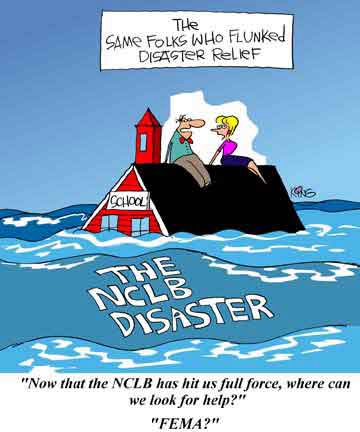
This past week (9/30/06) Education Secretary Margaret Spellings said the No Child Left Behind Act is close to perfect and needs little change as its first major update draws near.

"I talk about No Child Left Behind (NCLB) like Ivory soap: It's 99.9 percent pure or something," Spellings told reporters. "There's not much needed in the way of change."

qualityg says …Oh My! What an educated statement. 99.9% pure. Do the NCLB measurements indicate such a rating? Did she check with some Six Sigma Guru before she spouted that figure, where else would someone come up with such an asinine figure.

Spellings said her job is to present Congress with good data to help lawmakers do their job. She said she is open-minded about ways to improve the law.

But when asked if she meant the law is truly "99.9 percent" close to working properly, she said, "I think it is that close."

qualityg says … You mean to tell me that no one followed up and questioned her more on that answer?

NCLB Signed by President Bush in 2002, the law is widely considered the most significant federal education act since Congress approved its original version in 1965.

It aims to ensure that all children can read and do math at grade level by 2014, an aspiration that has placed unprecedented demands on schools. The law requires states to increase testing, raise teacher quality and give more attention to minority children.

qualityg says … Is it not true Secretary Spellings that the NCLB law comes up for renewal next year? Shame on YOU!

If the NCLB is to help minority students then why did two million minority students be excluded from the NCLBs most recent reports?

Why is there so much variation of state standards that creates uneven expectations and achievement for students across the country? Passing grades in one state would be failure in another.

Based on the above questions I believe it is safe to say “current variation in state standards DO NOT prepare our students for workforce (US and Global) or college.

Here is some more proof: Fewer U.S. students completing college
http://www.freep.com/apps/pbcs.dll/article?AID=/20060908/NEWS07/609080468/1009

Other posts by qualityg on NCLB at

http://qualityg.blogspot.com/2006/08/education-no-child-left-behind-growth.html


Updated 10/01/06

NCLB Checks and Balances just plain "SUCK" -


State Data Wrong & Feds Don't Care


No Child Left Behind Act sets the rules:

Under the federal No Child Left Behind Act, graduation rates must be collected in order to determine whether a school meets annual yearly progress (AYP) standards.

A high school must have an 80% graduation rate and meet certain testing requirements to satisfy its AYP.

Schools that fail to meet AYP for several years can leave themselves open to sanctions, including forcing a district to pay to transport students to better schools or ordering the restructuring of failing schools.

The Michigan Department of Education is required under the federal law to report graduation rates annually to the U.S. Department of Education.

Michigan's state Auditor General's Office reported:


Audit Objective:
To assess the accuracy of high school
graduation and dropout data used by CEPI
in its calculation process.
Audit Conclusion:
We concluded that high school graduation
and dropout data used by CEPI in its
calculation process was not accurate. Our
assessment disclosed three material
conditions related to verification of data
accuracy, data evaluation and validation,
and correction of Single Record Student
Database.


10 high schools around the state were checked for accuracy and all 10 had incorrect graduation rates, dropout rates or both.


For the complete audit (High School & Graduation Audit - go to http://audgen.michigan.gov/


qualityg says ... If you are from another state I would check to see if any audits have been done by your state attorney general's office.


The worst part about this mess is the federal governmnet knows the data is wrong but they still use the data to distribute federal dollars to schools. Yep, keep managing by the Bottom-Line. Another fine example of "The Demise of American Management."


A friend (KS) sent me this quote, I thought it applies to the NCLB. Instead of "He" put in "NCLB."


"He uses statistics as a drunken man uses lamp-posts...

for support rather than illumination."
-- Andrew Lang (1844-1912)


Updated 11/20/06


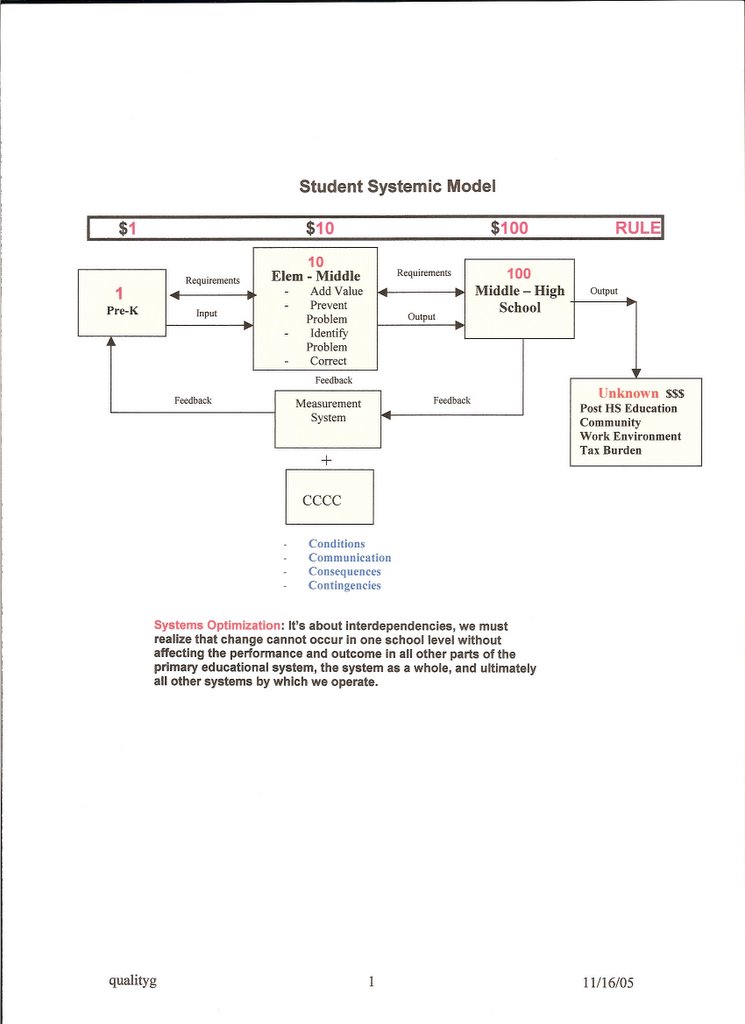
Perhaps a SIPOC Analysis is required. Please see my following diagram:


CLICK TO ENLARGE DIAGRAM


Other Posts on SIPOC by qualityg:


http://qualityg.blogspot.com/2006/10/qualitygs-sipoc-analysis-questions.html


http://qualityg.blogspot.com/2006/10/quality-tooltechnique-sipoc-cccc.html


Updated 6/25/07


Adequate Yearly Progress?


I continue to read and monitor reports on the NCLB Act. What does Adequate Yearly Progress (AYP) Mean ? This definition may help:


AYP is the key measure in determining whether a public school or school district is making “annual progress” towards the academic goals established by each state. Each state is responsible for setting goals that call for “continuous and substantial improvement” of each public school district and public school, with the ultimate outcome that all students must meet the state’s standards for proficiency in language arts and math by the year 2014.


As I read more about this Standard the more I am convinced it’s only a short-term “outcome” measure and I hate short-term “outcome” indicators because they only give you a snapshot of what is really happening to an individual student/school and it cause much Tampering to any System. What is required is a Motion Picture that captures the lifespan of an individual student/school system.

Those who would like to change the NCLB Act prefer the “Growth” model, which calls for on-going measurements of a student’s educational path. Those against it state this method requires a sound data management measurement system to track results. The decision makers in Washington D.C. doubt this method because the system discussed would not accurately track student progress – “AS OPPOSED TO WHAT?” – No measures at all requires each State (Process) to set its own standards as long as they meet AYP (outcome). – STUPID

NCLB which concentrates heavily on Reading and Math neglects the Big Picture of Education by excluding other subjects and application of knowledge by doing because this requires much stronger measurement methods (read above paragraph again) rather than Reading, Drilling and Regurgitation. Thus no Creativity is granted only “Yes People.”

Does NCLB really affect the quality of teachers? How could it? By what Method” Colleges and Universities supply and produce teachers into our school systems. By the time this happens it is too late. Perhaps the more stringent measures should be at the beginning of the process as opposed to the end when the product is already entrenched into tenure and the teachers union.

That is like having quality inspected at the end of a manufacturing line or when a customer returns a poor product. Is that any way to run a business or school system? Most businesses have been learning this lesson since the mid 1970s. The education system still runs like the 1870s.


See another post (Is it No Child Left Behind (NCLB) or No School Left Behind (NSLB)? By qg at http://qualityg.blogspot.com/2007/08/is-it-no-child-left-behind-nclb-or-no.html


Saturday, August 26, 2006

No Child Left Behind: "Growth Models (measures?)" + 1 in 7 Michigan Schools Fail - Updated 8/25/06

9/10/05


Whenever I get with a group of educators the discussions always include "No Child Left Behind." The talks are usually lively with many thoughts and opinions flying around all at once. Perhaps that is part of the problem, everyone has an opinion and answer but no one has yet to find the solutions to our educational system.

I also recently received an email from an educator in Oregon who wanted to know if I believed in the No Child Left Behind Act (NCLB).

For those not familiar with NCLB,

For at least ten decades, American educators have failed to come up with the right and wrong way of teaching and learning. The best minds at all levels of academia have struggled with these questions.

NCLB was developed on the theory of "what's good for business is good for schools." School productivity would improve if business principles and applications were applied. If I remember correctly this is what was stated by then Texas governor George W. Bush and in Houston by Superintendent Rod Paige. If such improvements could happen in Texas, then they could happen everywhere in America.

There are many articles written on whether or not Texas indeed get better because of their standards. I do not have enough knowledge to agree or dispute those facts. However, the

Following are problems I have with NCLB based on my facts and data:
My first complaint is the fact is NCLB does not include grades K- thru grade 3, how can that be.? By not understanding the importance of building a solid foundation during this time tells me you have no idea about the importance of education.

Second, let's address "what's good for business is good for schools." What businesses were used as models? The ethics and values that ran Enron (Hey, isn't Enron in Houston Texas, hope they did not use them as a model), Delphi, Adelphia, Arthur Anderson, WorldCom, Tyco, HealthSouth and others (see qualityg's write-up on -- CEO Fools that include examples of destructive leadership in action)? How about the mismanagement at AT&T that destroyed an icon. What about the automakers and their suppliers who are going bankrupt because of there continued short-term focus on quarterly results. I know let's use our MBA Programs for how to do things right. Whoopsy, we have been doing that too and they are leading many of the before mentioned companies.

The last time I read over the act I was intrigued to find the Act stated "If a school fails to make test gains in two successive years, the school can be labeled a failing school and the school's administrators must write an extensive (100+pages) school improvement paper to justify their job and school."

I'm not against school administrators writing improvement plans, but I question the validity of any test that only concentrates on a critical few (reading, math, science) and neglect the useful many (art, music, physical education, drama, play). Why does the plan have to be 100+ pages? Perhaps that is all that can fit on the white board (write - I will get better because I can, over and over).

How many schools are failing in your State? Do you know do you care? When I went to Michigan's Education site Assessment & Accountability I found all sorts of assessments (MEAP, Education Yes, Merit Exams, Michigan School Report Card, MI-Access, National Assessment of Educational Progress and there are more). I could not find any schools that have failed the NCLB. If anyone knows of a school I would be very interested in reading their 100 + page report. Double-spaced and in APA style format please!

All I can find are programs that measure what we are doing wrong, but none that display the standardized procedures that should tell us what to do correctly.


I was wondering who does the assessing for all these programs? There must be an army of assessors invading the schools weekly. At what cost does the state tax payer's pay for all these programs. Who does the follow-up assessment?

In summary, I'm all for test and theory, but NCLB and other state programs have failed, time to move to the next one. Learn from the others and bring what was right forward and leave the rest behind. One more thing the Government need not apply to help!

Here is an added bonus for your review. Please go to MI Fed Educ Budget 2006. Is it just me or does the middle class continued to get hosed when it comes to Federal and State Aid?

To check your state go to State fact sheet fed budget 2006.


Updated 11/26/05

I was talking with some head Start Administrators last week and I was startled at the amount of paperwork they must do in order to keep funding for NCLB. What bothered me most was the fact that this lady has worked 18 years in Child Care and Head Start and will lose her job if she does not get her 4 year bachelor degree.

She is currently in college working towards her degree as she is closing in on 40 years old. Sraisingo is rasing two children that are still in school. I asked her if the college courses she was taking are helping her do the administrator paper work required by the Federal Government? "Absolutely Not!" The worst part is a young person graduating with a 4 year degree (practicum experience only) this year may be taking her job next year if she does get her degree finished on time.

qualityg says ... 18 years experience and being a mother is < (less than) a four year degree when it comes to handling children. Again, it's another example of people (Govt) trying to do good that have no idea on how to plan on doing good, just throw out a plan and see if it works, don't worry if children and child care workers get hurt. WHY CAN'T THERE BE SOME GRANDFATHER CONSIDERATIONS OR TESTING OUT FOR FOLKS WHO HAVE OVER 10 YEARS EXPERINECE IN THIS FIELD. C'mon get real here Secretary Spellings!

Did you know that the No Child Left Behind Act has a new roadmap for improvement for State Implementation?

A Road Map for State Implementation
Pre-publication copy
November 10, 2005

Please go this site to download a copy: http://www.ed.gov/admins/lead/account/roadmap/index.html?exp=2

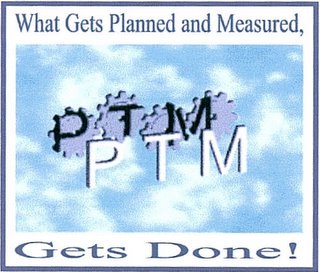
qualityg will have more to say on this plan later. However, I want to know who said (from the plan) "What gets measured gets done" First of all that is not accurate, if you don't have a "plan" for measuring the right thing then you measure everything (I think the govt is good at that). Those who follow my Blog know I mention this phrase frequently and even posted my symbol that I have used since 1993. Geez, get it right!


Following is quoted from Page 2 of the letter from Secretary Spellings:

"NCLB is a law of principles. Since Secretary Margaret Spellings took the helm at the U.S. Department of Education (Department) earlier this year, she began describing the law’s “bright lines” – the essential and indispensable markers on the road to implementing

NCLB: Assessments in Grades 3-8: What gets measured is what gets done. States must test all students annually in reading and math in grades 3 through 8 and once in high school by the 2005-06 school year – not every other year or every other class, but all students every year."

Updated 12/12/05

No Child Left Behind: A Road Map for State Implementation (11/10/05)


I have been reviewing this document for a couple of weeks and I must confess I’m having a hard time following this roadmap. There are many “What’s,” but no “How’s.” A road map is supposed to provide some standardization so that no matter what type of map or tracking system if you put in the correct information you will get back a standard way to reach your destination.

The NCLB road map is a circle. You may think you are going to a better destination but I’m afraid you will end up right where you started with a lot more wear and tear and cost to your vehicle. Following are some initial thoughts and questions, more to come at a later date.

Sentences/paragraphs in ITALICS are from the No Child Left Behind: A Road Map for State Implementation from Margaret Spellings – U.S. Secretary of Education. My questions and comments are in normal type.

The Road Map breaks down a sometimes-complex law into clear, common-sense principles, such as annual student assessment, disaggregation of data and proficiency by 2014. And it demonstrates the variety of fair and reliable methods being used to turn those principles into action. We want States to always be headed toward the right destination, even if how they get there differs along the way. From Cover Letter Page 1.

Ø Huh? common-sense? Ok we see the finish line, it doesn’t matter if you walk, crawl, run, take a train, or fly by balloon, just as long as you get to the same finish line (some just don’t make sense and some are just stupid). Efficiency and Effectiveness? By what method do you demonstrate fair and reliable? In order to do so you would need some success data, Please share so that we can see some hows and best practices?


The Road Map follows our announcement last spring of a New Path for No Child Left Behind. It was designed to reward States that showed real progress in reaching all students and improving academic achievement. We are pleased with the positive response they’ve shown. From Cover Letter Page 1.

Ø Does positive response = positive results?
Ø Who are they?

Disaggregated Data: Data are our best management tool. States and districts must provide data on student achievement by subgroup, inform parents in a timely manner about the quality of their child’s school, disseminate clear and understandable school and district report cards, and provide parents and the public with an accurate assessment of the quality of the teaching force. From Page 2.

Ø Please define timely manner?
Ø Good Data are your best management tool, is there a standard database for data on STUDENTS? I don’t think so.
Ø Accurate Assessment as opposed to what?


Highly -Qualified Teachers: States are responsible for implementing a rigorous system for ensuring teachers are highly qualified, making strong efforts to ensure that all students have access to highly qualified teachers, and providing support for recruiting and retaining the best and brightest teachers to our schools From Page 2.

Ø If state standards for teachers can be different how will I know that teachers in Mississippi are equal to those in Michigan? What happens if I move, does the NCLB provide teacher standards in a comparative form for each state? How could you, how could you know if there is wide variation and no standardization?

Results to date suggest this is a road worth traveling. Student achievement is improving in the United States, and student achievement gaps are closing. From Page 3.

Ø If states have different criteria and standards how can this statement be made? How can an individual state make this statement if they don’t collect data on individual students?

This document will help States and local educators understand what the Department expects as it reviews State policies and considers alternate policy options and flexibility for implementing specific requirements of NCLB. From Page 4.


Ø You mean it didn’t before?


Peer reviewers advise the Department on whether a State provides compelling evidence that its assessment system is consistent with NCLB requirements based on the totality of evidence submitted. Peer reviewers also provide constructive feedback to help States strengthen their assessment systems. From Page 5.


Ø What is a Peer Reviewer? Is there a list of names by State? How many are there? Seems very costly, is there associated training, what are their qualifications?

Refinement of Accountability/Adequate Yearly Progress (AYP) Measurement
There are a number of pages talking about sample populations, sub groups and sampling confidence Intervals. I always get nervous when I see everything being determined with average this and average that. I’m not a statistician so I would hope somewhere one would way in with their opinion in a common-sense manner for the general public.


Other States may want employ a statistical test to increase confidence in AYP determinations. In smaller States, or States with many small schools, such a test – a “confidence interval” – can help guard against making significant accountability decisions based on fluctuations in school performance or on the assessment results from a relatively small group of students.

There are other options as well. States may average student achievement data across grades and years to ensure more reliable AYP decisions. They may make different decisions about how to incorporate additional indicators into their AYP ratings. They may use “safe harbor” provisions or a growth index to factor improvements in student performance among the lowest performing students to make AYP determinations that are both valid and reliable. From Page - 8

Ø Safe Harbor??
Ø Average student achievement data – does that contradict that all students will improve. Won’t there still be some above and below average?
Ø Let’s suppose I have 5 students. There individual achieving are s follows (scale 1-100, 100 being the best). Student 1 – 80, Student 2 – 75, Student 3 – 75, Student 4 30, student 5 – 20. The average/mean would be 56. If I were to just show 56 it would convey an overall negative impression. How about adding the Mode – 75, and the Medium – 75. If I just looked at those individually it tells a different story, perhaps a more positive outlook for the same data. The range is 80 – 20, what does this tells us? What I’m trying to say is look at data from the Central Tendency. If you want a roadmap show all of the roads not just the ones where the average speed id 55 MPH.


Supplemental Educational Service Pilots

Supplemental educational services (SES) is an important component of NCLB, giving low-income parents real options to obtain free tutoring for their children. This extra help for students in schools in need of improvement, corrective action, and restructuring can be an important component of school improvement efforts.

Unfortunately, there is evidence from across the country that SES is not being implemented to its full potential. Too few eligible students are receiving SES. According to several studies, only 10 to 20 percent of eligible students across the country participated in SES during the 2003-04 school year. From Page 20.

Free Tutoring, this is an excellent concept for the “eligible” students. I know I had to take the initiative and hire a tutor for my kids at a rate of between 10-15 dollars an hour, 2-3 times a week. I did not have extra money laying around for this; it was just the right thing to do. All children should be eligible for tutoring. I know of at least 5 elementary and middle schools where this is offered. The eligible parents/guardians received numerous letters and handouts. The percent participating is far less than 10 –20 %. Some of the responses were – “I can’t get my kids to school any earlier”, or “I can’t keep my kids at school any later.” And, my favorite “They need the weekend to play.”

I will provide more questions later… until then, do your homework, don’t take my writings as gospel, it’s only information, gather your own facts and ask your own questions.

One final question --> Did anyone think of modeling all these ideas and improvement in a diverse set of school districts to be studied and then benchmarked. It would seem to me much more manageable, less costly and in the long run provide much needed standardization and timeliness of implemetation.


Other Posts on NCLB by qualityg:

NCLB is Scary

NCLB - The GAP Widens

UPDATED 8/9/06

ASPEN Institute Commission Hears about Impact of NCLB on Students with Disabilities

One of my frequent visits is to "The Aspen Institiute (http://www.aspeninstitute.org/)." The mission of the Aspen Institute is to foster enlightened leadership and open-minded dialogue. Through seminars, policy programs, conferences and leadership development initiatives, the Institute and its international partners seek to promote nonpartisan inquiry and an appreciation for timeless values.

I particularly like to read the "Commission On No Child Left Behind (Aspen - NCLB Commission)." Recently the Commission held a roundtable on the topic of "NCLB has increased attention and focus on achievement of students with disabilities."

The discussion centered on state assessments for students with disabilities and the impact of flexibility issued by the U.S. Department of Education on how schools are being held accountable for the achievement of these children.

The roundtable was co-chaired by Commissioners Judy Heumann and Ed Sontag. Commissioner Sontag stated, “Some have questioned whether children with disabilities can learn. NCLB has focused educators on increasing the performance of students with disabilities.”

qualityg says ... Commissioner Sontag there is the crux of your problem. Other issues stated in your report are the result of this stupidity. Concentrate on the Root Cause Upstream in this problem and the results will take care of themselves. Who are the "Some" referenced in your report.? Other possible solutions included the same ideas that every roundatble has on NCLB - more funding, more information, more funding, more highly qualified teachers, better curriculums and more funding. Every effort to move forward is curtailed by the "Some."

There were some excellent comments and recommendations:

Ricki Sabia, the Associate Director of the National Down Syndrome Society National Policy Center in Washington, DC stressed the need to debunk the myths about students with disabilities in order for NCLB to work at its fullest. She called for all students to be treated the same, to use a variety of assessments and sought to dispel the myth that students with disabilities cause schools to not make AYP.

Katy Beh Neas, Consortium for Citizens with Disabilities, Washington, DC credited NCLB with making schools focus on the academic achievement of students with disabilities. Along with her colleagues she strongly advocated to maintain students with disabilities as a subgroup within NCLB.

qualityg says ... Ladies I applaud your advocacy. However, one of the main "Somes" mentioned above are the very teachers everyone wants to train to become more "highly qualified" teachers. Many General Education teachers have a "Clandestine" war going on with NCLB and Special Education, it's best someone realizes this fact and bring it out at one of your roundtables.

For the complete report go to NCLB Disab Report

Another Site for excellent reports on education and some new ideas go to the Bill and Melinda Gates Foundation on Education at http://www.glf.org/Education/.

The USA Department of Education site for the NCLB Act can be found at http://www.ed.gov/nclb/landing.jhtml?src=pb

I check this site often, no new information has been listed for some time. Everything looks rosy if you read this site.

To read a post I wrote about Mainstreaming an Asperger Child go to

http://qualityg.blogspot.com/2006/07/quality-education-mainstreaming.html

update 8/25/06

The Commission of No Child Left Behind is releasing a Commission staff report on Growth Models: An examination within the context of NCLB. Since the enactment of the No Child Left Behind Act (NCLB) in early 2002, interest and discussion over tracking growth in achievement, or using growth models, has increased tremendously. The Commission staff analyzed necessary data components as well as an examined the benefits and disadvantages of incorporating and utilizing a growth model within NCLB. Lastly, the paper includes a brief discussion of two growth model pilot programs recently approved by the U.S. Department of Education in Tennessee and North Carolina.

Michigan School Report Card shows failing grades - 88.5% in 2006, down from 88.1% in 2005

The execuses for failure amaze me, it's alaways something or someone else who is to blame instead of personal accountability. For example Detroit Superintendent William F Coleman III said the reason Detroit fared worse this year (103 schools failed) than last (63 failed) is because the state moved up the testing period for the MEAP test to October from February (less time for teachers to prepare).

qualityg asks ... Then how come a large amount of those schools that failed are repeat offenders that go back at least 5 years of failure?

qualityg says ... And the teachers are going out on strike?

qualityg asks ... How come the "quality" of the Administration Personnel" are not included in calculation? Teacher quality is evaluated, why not their support system and bosses? Management (bosses) owns the system and they should be accountable.

Go to www.michigan.gov/mde for complete report.

Another Post (9/10/06) by qualityg at : http://qualityg.blogspot.com/2006/09/quality-education-nclb-is-close-to.html

Friday, June 09, 2006

NCLB ACT - UPDATED 6/8/06 - "report from the second hearing on testing"

THE GAP CONTINUES TO WIDEN

Americans are so impatient, we want everything now and we can’t wait for a solution to be developed let alone implemented before we are on to another subject or crisis.

Our Educational System continues taking a beating because of this type of thinking. Quickly come up with some solution like No Child Left Behind (NCLB), implement it and then force it to fit in a round hole when it can only fit into a square.

You then add in all the requirements for state testing (i.e., MEAP) and the ever changing school solutions as political parties change hands after each election and you have the recipe for “Tampering” and ultimately “Big Butt Wide Variation” that leads to failure.

Like in most failures it’s the little people who lose, as in this case our children.

Teachers have no choice but to teach to federal requirements and state tests (even when they conflict) that are bound by test dates. If a teacher is not a certain point in the lesson book then the children will not have had a chance to learn all the criteria for a passing grade. Unfortunately with this type of strategy the gap that is getting bigger between those minority students who will understand the learning’s regardless of requirements, and the majority students (average and below) who are falling further behind.


The average students are most likely to learn if given the “normal” time to learn a lesson plan. The so-called below average students need additional help and time that comes from a dedicated teacher and peers who help each other out. This type of learning does not take place in many many school districts.

So NCLB results are going to end up like unemployment figures. Once you have used up your weeks you are no longer counted as unemployed. In other words you don’t matter because policy and lawmakers use bogus statistics like these for creating budgets and dollars to be spent.

It’s not that parents don’t care; it’s just low on their priority list (until it’s to late) with all of the other things going on in each family. We address problems when they become disasters and then want speedy and basically “stupid” solutions spouted by equally “stupid” policy and lawmakers who are more concerned about getting elected.

Teachers are equally under the gun to try and save their jobs vs. making sure all the students are getting the attention they need to be successful.

NCLB guidelines published in December 2002 by the Education Department,
insist that parents of students in poorly performing schools be allowed to
transfer them even if it causes overcrowding elsewhere in the school district.

This assumes that moving poorly performing children about from one school to
another will improve the learning of those children and the performance of the schools themselves. Student performance improves when instruction improves, and
when instruction is given the proper time limits for the level of student’s knowledge in each class. However, this is not necessarily going to happen just because a student hip hops to a different school trying to find the best teacher. What about the next year, do you move your child again? What if there are only
a few good teachers in each school? The overall results will still be failure
for the school.

Systems Thinking (qualityg always insists on systems thinking) cautions us about unforeseen changes rising up whenever pressures are applied like the ones coming from NCLB and State Tests. If we measure only math and reading performance, for example, those scores may improve while other types of learning may decline (can anyone spell geography or name the three branches of government).

Studies show that NCLB's focus on just math and reading scores could have a profoundly unfair effect upon a generation of students in poorly performing schools, as schools may strip away much of the broad education that is their birthright in order to elevate scores on just two indicators. See what I mean, the gap is getting wider each day.

In Michigan, the Governor and her appointed educational staff want Math and Science to be the dominant two areas of study because they feel these are the main ingredients for job security for the future (wrong, state surveys prove parents do not feel this way).

Students in school districts that can pour as much many and additional resources
as needed in to their programs have a better chance of getting good scores will
be able to a learn much more diverse subjects like art, social studies and band, while disadvantaged students are condemned to a second-rate education. The goal
of elevating the performance of all students is laudable, but the change in performance must be across the board on all subject areas.

qualityg says… Our educators are getting more confused and frustrated as No Child Left Behind and State Test (i.e., MEAP) are leaving too many students, parents, teachers and administrators behind in a fog. “Systems Thinking” requires that all principal parts must come together before a total (whole) solution will be found.

In the meantime will you lawmakers responsible for the NCLB ACT please do an analysis and keep what is good and disregard what is bad. Let’s face it, not many large-scale project implementations go in error free.

It's time to get unleashed by politics and self-actualization and do what is right for everyone.

Go to No Child Left Behind for additional post by qualityg on NCLB.


Updated 2/27/06
qualityg has been asking for a review of this program for a long time. The study will be conducted by the Aspen Institute a nonprofit Washington think tank (oxymoron ??).


Updated 6/08/06
Testing: Making It Work for Children and Schools


The above title is the latest from the NCLB review as reported by the Aspen Institute. The title intrigued me because it reads like"MAKING SOMETHING HAPPEN," whether it is good or bad.
The testimonies provided by the panel of experts state that data proves a number of successes in many schools and states. For example,
The Center on Education Policy (CEP) also found that 78 percent of school districts surveyed for its study (From the Capital to the Classroom: Year 4 of the No Child Left Behind Act, released March 2006) reported that student achievement improved from 2003-2005 on the state tests used for NCLB. CEP also found statewide gains: 35 states said achievement had improved in reading during this time, and 36 states said it had improved in math. SAID??
HOWEVER,
The report states the data has a number of inaccuracies and missing elements that defines success.
"According to the Data Quality Campaign, no state data system currently includes every one of the 10 essential elements the Campaign defines as critical to longitudinal (or long-term) data systems. The question then becomes one of quality and utility: Are we able to effectively use the information gained from these annual assessments? Governor Roy Barnes, Co-Chairman of the Commission, raised this concern in his opening remarks, stating, “It makes little sense to assess our children if we can’t accurately and effectively manage the data which is produced from these assessments. Effective data systems can and should be one of the most important priorities for a state.”


So, what does all this mean? It means they have no idea if NCLB is working or not. One of the panel experts even used the aged old quality quote "we are data rich,
but information poor."
qualityg says ... "you are date poor and information poorer."

One highlight that I found was
"Tracking a student’s academic progress as he or she moves from grade to grade is gaining wide support as a more effective way of gauging student achievement and informing educational decision making." I have been asking and writing about this for some time, ther is no other way to accurately use trend data to really know if a student is progressing. It will also tell you how a group of students trending data can tell you if a school is progressing.


NOTE -
This does not mean using only state tests and repoirt cards as your input, itrequires teachers to do timely reviews and evaluations from all of their work, including behaviors.


My main concern is the lack of any mention of an improvement plan (which is good if data is bad, but I don't think that is why).


All I can say is wait until November of 2008 after the general elections for a new program roll-out telling us how the new method will correct the past mistakes - OUCH!
To read the complete report (there is also one on Children with Disabilities) go to

Friday, August 10, 2007

Is it No Child Left Behind (NCLB) or No School Left Behind (NSLB)?


"Both the NCLB and the Higher Education Act are up for renewal this year"


I have finally come to the conclusion that No Child Left Behind really means No School Left Behind. Why do I say this, because when I really stratify down into the interviews I hear, the television shows I see and the newspaper articles I read there is a common theme that most if not all are more concerned about the rating of their school first, teacher penalties second and then yes then the students.

So what happens when a school “fails”? According to the US Department of Education Website in a nutshell it means - If a school falls short of its AYP (Average Yearly Progress) goals two years in a row, it becomes a “Program Improvement” (PI) school. Program Improvement Schools become the focus to an intricate, high-pressure timeline in which they are set up to fail. By law, if Program Improvement Schools don’t make satisfactory progress--as measured by NCLB--at the end of four years, they face major restructuring.

One of the big points is teacher’s will also be looked at with great scrutiny and possibly could lose their jobs. My question is which teacher? The ones who had the students before you did and did mot prepare them or the current one who concentrated on learning instead of testing.

Problem – I don’t know of any public school (not charter) or teacher in trouble because of NCLB? I always read about the penalty but I never hear or see an example.

Another question I have is “Does our education system promote Testing or Quality Learning?” – Testing is an independent point in time type measure (like a snapshot). Learning is ongoing (like a motion picture) that tells the story of one’s life in gaining knowledge and understanding. Please don’t confuse the two and one does not represent or validate the other.

Here is a good site for many opinions and stories about NCLB - http://www.freep.com/apps/pbcs.dll/article?AID=999970804016&template=theme&theme=NOCHILD082007

Our education system always seems to have it backwards. Even if the Child does poorly in school (including state tests) they are more than likely promoted to the next grade. In fact I can’t remember the last time I saw a student held back other than at the kindergarten level. We don’t do it anymore because we don’t want to label the child. However, there is no problem labeling special education students by the dozens and oh yes they get promoted too.

Do I dislike the NCLB Act? By my writings you would think yes. In concept it has potential but you can’t wait several years until it’s up for renewal (this year) to make changes or bombard the media with visits from Secretary Spellings and President Bush to many public schools this year advocating its success. http://www.ed.gov/nclb/overview/intro/reauth/index.html

We cannot afford to lose another generation of children to a less than full-rounded education system (State & Federal tests) that relies on just-time labeling type measures (Math, Reading & Science). We need a system that creates a full rounded creative and innovative student that becomes a valued member of society through a process know as education (life long learning in all subject areas) and not a data point called Standardized Test (i.e., MEAP, NCLB).

For more posts by qg on NCLB please go to this site -
http://qualityg.blogspot.com/2006/11/quality-education-nclb-state-data.html

Monday, March 15, 2010

Obama promises children better teachers and schools - qg says ... HUH!

I just don’t get it. I have been anticipating President Obama’s Education plan with hope that we build upon the good things of No Child Left Behind and implement new standards and policies that will take our education system to the next level.

Over the weekend I read an article highlighting some of the changes coming with the so called:”new plan.”

What follows are the highlights (or lowlights as I prefer).

A few other highlights from the blueprint: PLEASE SEE MY COMMENTS FOLLOWING EACH PARAGRAPH.

• By 2020, all students graduating from high school would need to be ready for college or a career. That's a shift away from the current law, which calls for all students to be performing at grade level in reading and math by 2014.

qg says… This is not a shift this is mumble jumble bureaucratic talk. Both laws are result measures that have no plans or methods attached as to how they will be accomplished. People should avoid using the word “All.” Give me a method and tell me the process measures that will be implemented with the new guidelines (this does need mean after the fact ASSESSMENTS).

• Give more rewards -- money and flexibility -- to high-poverty schools that see big gains in student achievement and use them as a model for other schools in low-income neighborhoods that struggle with performance.

qg says… Money is always the solution for politicians and bureaucrats. Please understand money is not a means or a motivator that will solve the education problem. When will someone implement guidelines that hold parents, teachers and administrators responsible and accountable for education?

• Punish the lowest-performing 5% of schools using aggressive measures, such as having the state take over federal funding for poor students, replacing the principal and half the teaching staff or closing the school altogether.

qg says… Check this out. Read the next paragraph where Duncan states that No Child Left Behind (NCLB) is harsh and that punishes schools. Now read where the new plan calls for get this “PUNISHING” low performing schools using aggressive measures (oh by the way I bet these will be “result” measures (after the fact measures) AAAGH!!

• Duncan has said the name No Child Left Behind will be dropped because it is associated with a harsh law that punishes schools for not reaching benchmarks even if they've made big gains. He said the administration will work with Congress to come up with a new name.

Amy Wilkins, a vice president with the Education Trust in Washington, D.C., called the blueprint a "culture shift."

qg says ... Culture Shift??? We need a Paradigm Shift!!!

"One of the things America has not been clear about is what K-12 is supposed to do," Wilkins said. "In this, we're saying K-12 is supposed to prepare kids for college and meaningful careers."

qg says … Take a look at the last quote and paragraph. Ms. Wilkins please tell me this is a miss quote or not explained well enough because if you are saying America has not been clear what k-12 is then we are doomed. This is a ridiculous statement and if this is thinking of the Education Trust folks in Washington then I have no trust we will ever solve our education woes.

HUH!!!

p/s - I will gladly recant any of my remarks once the complete plan is published.

Here is the link for the "Blueprint for Reform (Currently Reviewing).

http://www2.ed.gov/policy/elsec/leg/blueprint/index.html


UPDATE - 3/16/10

I have finished reviewing the 42 page Blueprint Document and I stand by my comments above. "Fluff" is the word that most comes to my mind as I read the proposals.

There are many "Whats" but not much mention of "Hows" or by what method will these changes among Federal, State & Districts will take place.

On Page 42 the heading says "Measuring Success" - As I feared above these are "Result" (After the Fact) measures that take two years to determine if key indicators are "effective" (Another word the proposal uses that means after the fact).

I was looking for "efficiency" and Process Measures that are required to measure such things as "Key Indicators" as the implementation process is working (While the Train is Moving) not at the end of the trail (Back the Train up and go back and correct),

Oh Well - HUH!!!

Friday, September 23, 2005

Education: ASU Study Predicts 95 % of Great Lakes Schools Will Be Labeled ‘Failing’ by 2014


qualityg says... Guess which state is slotted for the biggest fall? The results of this study are very troubling. Please see the scenario for Michigan below in Red.

Press Release

Contact: Teri Moblo (517) 203-2940 (email) tmoblo@mea.org orAlex Molnar (480) 965-1886 (email) epsl@asu.edu

TEMPE, Ariz. (Wednesday, September 14, 2005) - Fewer schools in the GreatLakes region were labeled “failing” this year. That will change, however, if the federal No Child left Behind Act of 2001 (NCLB) continues to be the driving force behind the measurement of school and student success. Mostschools in the region will labeled “failing” by 2014, according to “TheImpact of the Adequate Yearly Progress Requirement of the Federal No ChildLeft Behind Act on the Great Lakes Region,” a study released by the GreatLakes Center for Educational Research and the Education Policy StudiesLaboratory at Arizona State University.


The study is the first multi-state research to use actual state data to predict how schools will fair under No Child Left Behind current AdequateYearly Progress (AYP) requirements. The authors, Edward C. Wiley,University of Colorado-Boulder; William J. Mathis, University of Vermont;and David R. Garcia, Arizona State University, assessed how much gainschools made in 2003-2004 and used these data along with each state’s established growth expectations to predict how many schools will meet the federal requirement of 100 percent proficiency on state high-stakes tests by 2014.

Regardless of the growth expectations set by the Great Lakes states, theresearch findings are clear: Approximately 95 percent of the schools in the Great Lakes region will be labeled “failing” by 2014. The state-by-statepredictions are:

Indiana: Under the best case scenario, it is projected that 54 percent of schools will fail by 2014. Under a more realistic scenario, 80 to 85percent of schools will fail.

Wisconsin: Under the best case scenario in, it is projected that over half of the schools will fail by 2014. Under a more realistic scenario, 84 percent of schools will fail.

Ohio: Under the best case scenario, it is projected that almost half of the schools will fail by 2014. Under a more realistic scenario, close to 80percent of schools will fail.

Minnesota: It is projected that 85 percent of schools will fail by 2014.

Michigan: Under the best case scenario, it is projected that half of the schools will fail by 2014. Under a more realistic scenario, almost everyschool will fail.

Illinois: Under the most optimistic scenario, it is projected that over 65percent of schools will fail by 2014. Under a more realistic scenario, thatnumber is closer to 85 percent.

“It’s fail now or fail later,” said Teri Moblo, Director of the Great LakesCenter for Education Research and Practice. “Under the current system, schools are destined to be labeled as failing and there is no way around it.The question isn’t will schools fail, it’s when will they fail. Withoutincreased flexibility in the AYP requirements and a focus on the underlyingreasons why students do not perform well on such tests, we will continue toinvest huge amounts of time and money in a system where failure isguaranteed.”

The authors point out that AYP measures the success or failure of schoolsand students solely on high stakes test scores in basic academic areas.They point out that the special needs and learning styles of students arenot taken into account; that the impact of poverty and diversity on aschool’s ability to achieve AYP is not addressed; that testing and sanctionsfor not making AYP do not address the underlying causes of poor testperformance; and that in order to meet yearly AYP goals, states are forcedto direct their increasingly limited resources toward the administering andscoring of standardized tests, estimated to cost between $1.9 billion and$5.3 billion for 2002-08.

The study goes on to recommend ways to increase student learning and improve AYP results:
* Develop programs that include families, community, and health providers,and that strengthen childcare, early education, summer and after-schoolactivities, and technical education, among other vital and essentialservices.
* Dedicate adequate funding for remediation and social infrastructure, toovercome disparities and meet student educational needs.
* Create realistic, comprehensive school evaluation systems that involve avariety of evaluation methods.
* Set realistic standards linked to external expectations and grounded inresearch.
* Use aggressive confidence intervals and subgroup sizes to measure rates ofgrowth.
* Modify the standards and growth expectations for special education,non-English speaking, and migratory students.

Thursday, November 17, 2005

Aw C'mon now - this education stuff is getting ridiculous, isn't it? updated 11/17/05 - Student Systemic SIPOC Model & New State Standard for HS


OK, Michigan Department of Education now I am really confused. I have blogged many posts on a variety of topics concerning the status of education in Michigan.

Many educators and parents have even responded by Email thanking me for some additional information. Last week I started to read the Department of Educations "School Report Card." It can be found at MI School Report Card under current topics. I would advise you to print out the reports listed because you will go crazy trying to figure out what it all means.

In Saturday's Detroit Free Press it looks like a number of their writers tried to report the findings, they even got some quotes that really don't help, they just support the positive twist of the title "359 schools rise from failing list" State gives out more A's, B's this year."

If you glanced at the title you might think schools are improving. Based on my reading Friday at the state site I did not get the same impression. The article even states "While the state gave out more A's and B's this year, the number of schools getting the poorest grades of D-Alert and Unaccredited is also on the rise."

I don't blame the reporters, I'm sure they were just reporting what someone told them. By the time you get done reading all this stuff it's hard to tell which is which and do they support the same goals.The Michigan accreditation system is named "Education YES, A Yardstick for Excellent (qg says ... please define excellent school) Schools" and The federal program is named "Adequate (qg says... please define adequate) Yearly Progress (AYP)," under the federal No Child Left Behind Act (NCLB). Together they make up the Michigan's school accountability system.

I learned this by reading the "Guide to Reading the Michigan School Report Cards 2005 Edition" at Guide to Read School Report Cards. I have many questions concerning this document like I had about the others I posted, but I'm not going to respond until some other questions get answered from previous posts. The following posts range from April to August of this year:

click on the following:
qualityg again responds to Michigan School Improvement Framework
MI State Education Plan for 2005 - 2010
MEAP Scores Improving?
No more HS Grad Parties
Education - A Nation & State at Risk
Lt. Gov Cherry task force - Raise Michigan Standards
Michigan Higher Education: Promise or Dream
Michigan Education: here we go again

Hope you are still with me because it gets more confusing as I try to understand our education system from end-to-end (systems thinking). There are at least four major initiatives all going on at the same time (Lt. Gov Cherry Task Force, Michigan School Improvement Framework, MEAP scores special meeting task force, and AYP's school report card,). I'm sure there are others too. The best I can tell different groups/departments are running with these initiatives.

From a quality perspective I had hoped all the initiatives would be found in the Strategic Plan 2005 - 2010. Some are mentioned and some are not. I'm sure the associated detailed project plan that accompanies the Strategic Plan identifies those responsible for each project and the improvement plans that go with each one. It should also show overlaps and how each effort is interdependent on the other for success. Geez, I sure hope they are NOT independent efforts because then you have improved nothing and we have made another very costly effort (by the way I have been asking about dollars, where are they coming from and how much for each initiative)?


Please someone tell me who is coordinating all these efforts. The Michigan School Report Card reminds me of "Management by Objectives (MBO)," and some of you know how I feel about those business plagues. Some indicators are mentioned but others are not to be found, you assume by constantly adjusting and changing scores, variables, etc. that it helps (you are tampering), you are wrong, you think you are driving forward, you are not because your eyes are on the back of your head looking back.


Your results are based on Standardized tests and requirements (MBO), but the means by which schools obtain them are left to the individual schools and districts (you may think they are standardized but they are not, C'mon be honest). You mention best practice with no examples; you talk about snapshots, when you need a movie. I could go on, but I won't for now.


The saddest part of all is that many teachers and parents have no idea what is going on, how can you expect them to work toward moving targets, different objectives and not one common aim for our educational system. The one common aim is our children, lets have one common effort, this doesn't mean one initiative.


Aw, C'mon now, this is ridiculous, isn't it?


updated 8/29/05

Here is a link to an article in today's Detroit Free Press by Lori Higgins.

Don't Stop now, Gov tells schools

qualityg says... I think Mr. Chuck Wilbur may be on the right track, too soon to tell.

updated 9/16/05

Governor Calls for Mandatory Statewide Curriculum
Says Education is Critical to State's Economy


LANSING: In her weekly radio address, Governor Jennifer M. Granholm today said establishing a rigorous mandatory curriculum for Michigan high school students is critical to the state's economic future. She also thanked the State Board of Education for moving forward on her call to establish higher standards for Michigan's high school students.

"With Michigan's economic future on the line, we can't afford to have our 500 local school districts marching in different directions," Granholm said. "Instead, we need a high standard, mandatory curriculum to get all our students on the road to higher education and a good paying job."

The State Board of Education is scheduled to unveil curriculum recommendations in mid-November.

Creating a statewide curriculum is another step toward reaching Granholm's goal of ensuring that more students are prepared for jobs of the future. She has called for a doubling in the number of college graduates in Michigan in the next ten years.

"I believe strongly in putting a degree in the hands of every single child," Granholm said. "To do that, we have to improve education at every level in Michigan. And by doing so, we'll help prepare our students for success in school, success in college, and we'll help our economy succeed."

The Governor noted that states with the highest number of college graduates are also the states with the lowest unemployment rates and strongest economies. While other states and countries have adopted requirements in critical fields like science and math, Michigan does not require a single course, other than civics, to graduate from high school. Creating a mandatory curriculum in these critical fields is an essential step in ensuring Michigan is the most well educated state in the nation and an engine for knowledge based job creation.

Earlier this year, Governor Granholm signed legislation that will require high school students, starting with the class of 2008, to take a nationally recognized college entrance exam, such as the ACT or SAT, instead of the MEAP test. She also proposed increasing funding for K-12 education to record levels.


By Mike Thompson - Detroit Free Press


qualityg says... By What Method where the "mandatory curriculum" created? And, if you really want to have more degrees you need state funding for Pre-K - 16.

Getting just a High School Dipolma is no longer acceptable (get rid of high school graduation), be bold govenor, lead the way to a new "Paradigm" about education, forget politics and do what is right.

Unveil (where will the ceremony be held)? Curriculum recommendations? Will that be the "New Michigan School Improvement Framework?

updated 9/21/05

I just wanted to let everyone know I am receiving feedback from the Governor's office about many of the questions I have been raising. Here is some additional info that I received in an Email yesterday.

Thank you for writing to Governor Granholm's office. I will be expressing your thoughts to the Governor and her Executive Staff.

The State Board of Education will be seeking input on what the needs and priorities of education are for the state. They will be having public meetings and asking for involvement from businesses, education authorities and the general public. I believe that their first meeting is on October 1st. They will post meetings on the website that can be located at:
http://www.michigan.gov/md

updated 10/30/05


I recently received an email from an educator in Oregon who wanted to know if I believed in the No Child Left Behind Act (NCLB).

For those not familiar with NCLB,

For at least ten decades, American educators have failed to come up with the right and wrong way of teaching and learning. The best minds at all levels of academia have struggled with these questions.

NCLB was developed on the theory of "what's good for business is good for schools." School productivity would improve if business principles and applications were applied. If I remember correctly this is what was stated by then Texas governor George W. Bush and in Houston by Superintendent Rod Paige. If such improvements could happen in Texas, then they could happen everywhere in America.

There are many articles written on whether or not Texas indeed get better because of their standards. I do not have enough knowledge to agree or dispute those facts. However, …

Following are the problems I have with NCLB based on my facts and data:

First, let's address "what's good for business is good for schools." What businesses were used as models? The ethics and values that ran Enron, Delphi, Adelphia, Arthur Anderson, WorldCom, Tyco, HealthSouth and others (see qualityg’s write-up on -- CEO Fools that include examples of destructive leadership in action)? How about the mismanagement at AT&T that destroyed an icon. What about the automakers and their suppliers who are going bankrupt because of there continued short-term focus on quarterly results. I know let’s use our MBA Programs for how to do things right. Whoopsy, we have been doing that too and they are leading many of the before mentioned companies.

The last time I read over the act I was intrigued to find the Act stated “If a school fails to make test gains in two successive years, the school can be labeled a failing school and the school's administrators must write an extensive (100+pages) school improvement paper to justify their job and school.

I’m not against school administrators writing improvement plans, but I question the validity of any test that only concentrates on a critical few (reading, math, science) and neglect the useful many (art, music, physical education, drama, play). Why does the plan have to be 100+ pages? Perhaps that is all that can fit on the white board (write - I will get better because I can, over and over).

How many schools are failing in your State? Do you know do you care? When I went to Michigan’s Education site Assessment & Accountability I found all sorts of assessments (MEAP, Education Yes, Merit Exams, Michigan School Report Card, MI-Access, National Assessment of Educational Progress and there are more). I could not find any schools that have failed the NCLB. If anyone knows of a school I would be very interested in reading their 100 + page report. Double-spaced and in APA style format please!

All I can find are programs that measure what we are doing wrong, but none that display the standardized procedures that should tell us what to do correctly.


I was wondering who does the assessing for all these programs? There must be an army of assessors invading the schools weekly. At what cost does the state tax payer’s pay for all these programs. Who does the follow-up assessment?

In summary, I’m all for test and theory, but NCLB and other state programs have failed, time to move to the next one. Learn from the others and bring what was right forward and leave the rest behind. One more thing – Government need not apply to help!

Here is an added bonus for your review. Please go to MI Fed Educ Budget 2006. Is it just me or does the middle class continued to get hosed when it comes to Federal and State Aid?

To check your state go to State fact sheet fed budget 2006.


updated 11/05/05

Granholm Urges Citizens to Complete College Degrees
Proclaims November “Return to Learn” Month

“Michigan’s incredible network of universities, colleges and community colleges is really stepping up to the plate with “Return to Learn” month,” said Granholm after taping her address. “Together, we are going to make sure people across our state know that the barriers to finishing a college degree are few, but the rewards are great.”

qualityg says... It's a start, but c'mon, "barriers are few"?

For the complete proclamation got to http://www.michigan.gov/gov

updated 11/07/05

QUALITY OF EARLY CHILDHOOD EDUCATION (PRE-K)?

From a business view many of the organizations in the United States realize that Quality must be built in the design stage in order for a product or service to have a chance in the competitive marketplace.


From an educational system point of view this has yet to be understood. Many provide lip service but most have no idea on how to implement such a program or as to where they should start. To start --> Pre-K to at least 3rd grade should get the majority of funds for designing the best standardized quality requirements and teachers that can be developed.


Implementing standardized requirements at the end of the process (12th grade) are called Quality Results. You cannot manage by Quality Results; you need to manage by Process Indicators throughout the educational process. Waiting until the end is too late, too costly and too wrong.


I'm not against them, just against them if they are stand-alone. Implementing requirements only at the high school level will bring out nay sayers that say too many kids will drop out because of the strictness and difficulty of the tests. Yes, if you wait until the end it indeed will happen, save them up front where it counts, provide them multiple opportunities through the early years to catch up and get help. Waiting to the end is just plain SILLY!


It is no different than business, children will not be able to compete in the global marketplace without Quality being built and designed in up front in the system.

updated 11/13/05

In Sunday's Detroit Newspaper (11/12/05) the following article appeared. Uncanny isn't it (see blog post directly above)? I like the concept and I really like the fact they are including all disciplines.

However, Mr. Flanagan and the state educational officials are still looking at a piece of the educational puzzle and not the whole. Also, By what methd will this be rolled out? Do we have an adequate amount of math teachers skilled enough to meet the new standards? Will all of the other programs that school districts are supposed to implement be changes to include this new standard (there is enough confusion already).

16 classes or forget a diploma
State wants to require more math, science to get high school students ready for work world.

Here is the complete story: 16 classes - Diploma

qualityg says... please review "Student Sytemic SIPOC Model" (by qg - 1993)

Click on picture twice (2) to enlarge


qualityg says ... If you study my model you can easliy see the cost to improve the educational system costs much less up front than to try and fix the problem towards the end.

It will be interesting to see the comments and local school commitees that are formed to fight this educational mandate stated by Mr. Flanagan. Many parents will challenge the strictness and difficulty of the standard simply because they don't have the knowledge to help their children at home and it will be too costly to get additional help if their local school teachers and administration are not up to the task.

Warning - I have already heard some high school teacher say they should be compensated more because all the burden of standards falls on to their shoulders.

OH MY! We have a long way to go Mr. Flanagan.

Thursday, August 17, 2006

Our current Educational System is like a "WEED" & I want teachers to wear a badge that says "I'm a Highly Qualified Teacher" see update 8/17/06

8/14/06

As I trekked along the Midwest States this past weekend driving my son to his next destination of continual learning (grad work) at a Big Ten University (Illinois, Indiana, Iowa, Michigan, Minnesota, Ohio, Pennsylvania and Wisconsin) I had a lot of time to think about our educational system.

As much as I did not want to admit the cost of education kept creeping up because of the costs of this out state program. It used to be those going into the medical field charged up huge amounts of debt that would hope to be repaid in a lucrative career once graduated. Now it seems every field has its students (my son included) taking out large loans to cover educational expenses. Unfortunately it may take a lifetime for some of these students to pay back their loans.

I’m starting to think of our educational system as a living entity, perhaps a weed. It continues to spread and stranglehold teachers and students at an alarming rate each year. It grows through cracks and crevices in the foundation of our system. Yes, there are times when we stop and apply some very costly weed killer but it is only temporary and the system picks up again and continues to romp across the land as it wishes because no one can stop this obnoxious growth.

Like a weed the same people (government, admin) who claim to protect our educational system and nurture it for a living are no longer valuing our educational system. Changes upon changes with no idea if they will work are applied with spreaders that have no gauge or measure for how much they are choking off the system. Just lay it down and let’s if it works, if the grass burns and turns brown don’t worry we will water the hell out if it and re-sod next year.

There is too much noise (inside & outside) invading our system that makes it is impossible to predict if any good changes will come from new solutions. People doing their best effort only see the system from one point of view and do not take the time to learn all the interdependent parts that must be considered when making changes. Adding a third wheel to a bicycle may imply that the bike will go faster, but will it, if no one knows where to put it and how it will interact with the original design?

Perhaps those trying to do their best are too close to the situation, our educational system can no longer (if it ever did) understand what it is doing to itself. An extreme makeover is required and this can only come from outside the system. I think I see a new “Reality” show in the making. A system in this much trouble can not fix itself, no matter how hard it tries. Do we need more proof and money to make this claim? I think not.

I wish I had all of the answers, for now I will just keep asking the questions. Next week I will have some more time to think as I move my daughter back to school for her Junior year at another Big Ten school (at least it is in state).

I do have one question:

What makes a teacher "Highly Qualified" as apposed to a "Normal" Teacher? For example, NCLB says :

To the extent required by the no child left behind act of 2001, Public Law 107-110, the board of a school district or public school academy shall ensure that all components of the curricular requirements under this section and section 1278a are taught by highly qualified teachers. If a school district or public school academy demonstrates to the department that the school district or public school academy is unable to meet the requirements of this section because
the school district or public school academy is unable to hire enough highly qualified teachers, the department shall work with the school district or public school academy to develop a plan to allow the school district or public school academy to hire enough highly qualified teachers to meet the requirements of this section.

When I check out the Michigan of Education web site on Highly Qualified Teachers it only pertains to Special Education. I suppose one is highly qualified if the person has special educational endorsements, advanced degree and records of measures that display achievements based on criteria set up by the state and NCLB. Perhaps listing the names and credentials of "Highly Qualified Teachers" in each state could serve as a model.

What does the American Federation of Teachers have to say? According to a new report ( http://www.aft.org/presscenter/releases/2006/smarttesting/index.htm) on statewide testing released today by the American Federation of Teachers (AFT), most states have made progress in developing clear grade-by-grade standards, but many have not aligned their high-stakes math, reading and science tests with a strong set of content standards, which leads to a distorted picture of how students, schools and teachers are performing.

8/17/06

It seems my post was timely since the U.S. Department of Education came out with a report yesterday (8/16) about 39 states (including Michigan) lacking in highly qualified teachers.

The U.S. DOE site has some interestinf state facts. For example, the state of Michigan's plan is NOT acceptable according to the DOE reviewer. It says:
Comments to support determination:

"This state’s major deficiencies are its equity plan and the lack of a monitoring plan. The information submitted under Requirement 6 does not include specific, data-driven plans for ensuring that all children are taught by highly qualified teachers."

"Monitoring is a critical function in ensuring that LEAs meet the HQT requirements.
The lack of a monitoring plan gives no indication that the SEA knows which districts are in compliance with HQT requirements and which teachers are receiving high quality professional development. Requirement 4 does not provide sufficient information to ensure that LEAs will comply with the requirements of HQT."


Here is the link to check out your state - http://www.ed.gov/news/pressreleases/2006/08/08162006a.html

qualityg says/asks ... numbers, monitoring plans, no plans, after the fact reviewers/auditors. Will somebody please let me know HOW I can tell the difference between a highly qualified teacher and just a regular teacher from a NOT Highly Qualified Teacher?

How come Administration Personnel are not identified as "Highly Qualified Admins" Management owns the system and they are the support system and bosses - Right?

If our colleges are not producing "Highly Qualified Teachers" the first time they graduate should they not be held accountable? Does the State and Student get a "refund" from the college or university that fails to educate "Highly Qualified Teachers? Can students bring a law suit against their teachers for not being a Higly Qualified Teacher?

Do we not produce qualified graduates because public colleges spend more money on Research than on Teaching students (Research not Tuition)?


Will Teachers be required to wear a badge that says "I'm a Highly Qualified Teacher?"


I wonder if the money the government spends on soldiers training makes them all Highly Qualified? They all get patches and badges. See http://qualityg.blogspot.com/2006/08/education-college-tuition-rates-up-up.html

This is such a "butt ugly mess."